




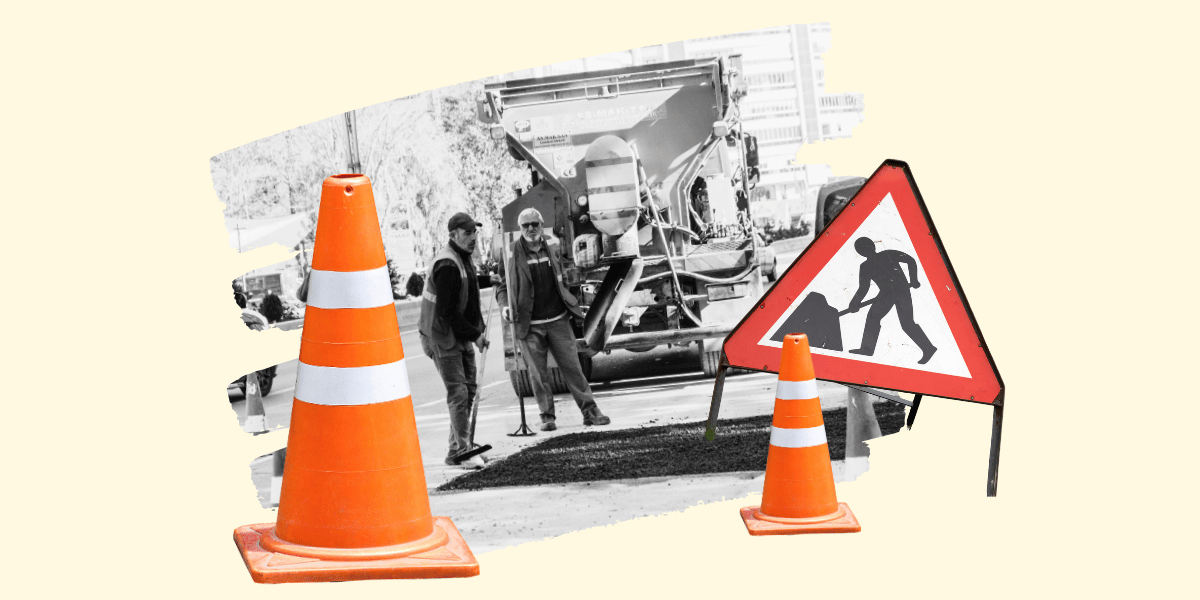
If it feels as though Britain is permanently wrapped in traffic cones, you are not imagining it. Roadworks across the UK have surged to levels not seen before, becoming a daily source of frustration for drivers, businesses and communities alike.
What was once a political punchline in the era of John Major's infamous "cones hotline" has become a serious national issue with major economic and social consequences.
According to figures highlighted by the BBC and national transport bodies, the total amount of road closures linked to works more than doubled between 2023 and 2025 - from around 203,000 miles to over 425,000 miles.
These include everything from temporary traffic lights on local streets to motorway lane closures and long-running infrastructure schemes.
With most journeys in Britain still made by road, this explosion in roadworks is no small inconvenience. It is reshaping how people experience travel, how businesses operate and how communities function.
Why Have Roadworks Increased so Sharply?
The rise in roadworks is not the result of a single policy or failure, but rather several long-term trends colliding at once.
1. A wave of utility upgrades
Local roads are increasingly being dug up by utility companies to modernise essential services. Gas pipes, water networks, electricity grids and broadband cables are all being upgraded to meet the demands of modern life. Full-fibre broadband, electric vehicle charging capacity, and more resilient water and power systems all require physical access to the street beneath our feet.
The Local Government Association reports that "street works" - utility-led roadworks - have risen by around 30% over the past decade and continue to increase. With major housebuilding plans and the transition to low-carbon energy, this trend is unlikely to slow.
2. An ageing road network
Britain's motorways and major roads were largely built during a construction boom in the 1960s and 1970s. Many of those assets are now reaching the end of their design life. Bridges, concrete road surfaces, drainage systems and safety barriers all need replacing or reinforcement.
National Highways, which manages England's strategic road network, has been clear that years of under-investment mean much of this work is overdue. The result is large-scale projects that cannot be avoided - even if they are deeply disruptive.
The Economic Cost of Congestion
The Department for Transport estimates that congestion and delays caused by roadworks and street works on England's local roads cost the economy around £4 billion in 2022-23 alone. That figure captures lost working time, delivery delays, fuel waste and the knock-on effects on productivity.
But behind those numbers are very real human stories.
Small businesses are often among the hardest hit. In Rochdale, a pet supply shop owner said months of roadworks outside her premises had created "hideous" congestion, deterring customers and damaging trade. When access becomes difficult, footfall drops - even if the business itself is blameless.
Tourist attractions suffer too. At RHS Wisley, near Junction 10 of the M25, a £300 million motorway improvement scheme has reportedly discouraged hundreds of thousands of visitors each year due to long-running disruption. The organisation does not oppose the improvements, but questions whether the scale and duration of disruption could have been better managed.
For professional drivers - from HGV operators to community transport and taxi drivers - roadworks create a rolling obstacle course. One veteran lorry driver described how he moves from one set of work straight into another, often with no visible activity. That fuels a perception that disruption is poorly planned or unnecessarily prolonged.
What is Going Wrong?
A House of Commons transport committee report last year identified several systemic problems in how roadworks are managed:
- Works that overrun their planned schedules
- Poor reinstatement of road surfaces
- Weak coordination between utility companies and councils
- Inadequate communication with the public
When multiple companies dig up the same street in succession, or when work stalls for weeks with little visible progress, frustration quickly turns into anger. For communities that rely on cars, buses, dial-a-ride services or volunteer drivers, these inefficiencies translate directly into longer journeys, missed appointments and reduced access to essential services.
How the Government is Trying to Respond
Ministers now recognise that roadworks are no longer a minor irritation but a drag on economic growth and public confidence.
Two key measures are being rolled out:
Higher fines for overruns
Utility companies can now face much larger penalties if their work exceeds agreed-upon timescales. The aim is to make delays financially painful, encouraging better planning and faster delivery.
Lane rental schemes
Councils and metro mayors are being given powers to charge utility firms up to £2,500 per day for occupying busy roads at peak times. This creates a strong incentive to avoid the worst disruption and complete work more efficiently.
However, utility companies warn that these costs may ultimately be passed on to customers through higher bills. And while the schemes can help, they are not a cure-all.
A Better Way Forward? Short, Sharp Disruption
One of the more promising approaches now being used is what engineers call "short, sharp shock" closures. Instead of keeping lanes partially open for months, major roads are sometimes closed entirely for carefully planned weekends or holiday periods so that work can be completed much faster.
This approach was used at M25 Junction 10 and on parts of the M27. In one case, a motorway was closed over Christmas to install a new underpass, and the project was completed early. For drivers, a few intense days of disruption can be preferable to months of slow, grinding congestion.
The lesson is clear: good planning, honest communication and strong coordination can dramatically reduce the pain - even when the work itself is unavoidable.
Why This Matters Beyond Motorists
Roads are not just for private cars. They are the arteries that support:
- Community transport services
- Volunteer driver schemes
- Bus and coach networks
- NHS patient transport
- Local deliveries and social care visits
When congestion rises and routes become unpredictable, these services become harder to operate and more expensive to run. For elderly and vulnerable passengers, delays can mean missed hospital appointments, isolation, and reduced independence.
As the government places infrastructure at the heart of its economic growth strategy, how roadworks are managed will increasingly shape public trust in that ambition.
From Punchline to Policy Priority
John Major's "cones hotline" may have been mocked in the 1990s, but the issue he highlighted has only grown. Roadworks today are not a niche complaint - they are a national challenge tied directly to productivity, living standards and the functioning of everyday life.
Britain does need better roads, faster broadband and stronger energy networks. But it also needs a system that delivers them with intelligence, efficiency and respect for the people who depend on the road network every day.
If that balance can be struck, the orange cones might finally feel less like a symbol of chaos - and more like a sign of progress.