


City transport keeps urban life moving. It carries people to work, to school, to medical appointments and to the shops, and it shapes how connected a place feels. Across the UK, city transport is changing fast, shaped by new legislation, tight funding and technology that lets services flex around real passenger demand.
This article explains what city transport is, how it works in the UK, who runs it and where it is heading. It also looks at how demand responsive transport and live GPS tracking are helping operators run leaner, more responsive networks that treat passengers as people rather than parcels.
Key Takeaways
- Buses remain the most used form of public transport, with 4.08 billion local bus journeys across Great Britain in the year ending March 2025 (DfT).
- The Bus Services Act 2025 gives councils in England more control over local buses, including easier franchising and their own bus companies (DfT).
- Single bus fares in most of England are capped at £3, falling to £2 outside London from 1 January to 31 December 2027 (DfT).
- Demand responsive transport lets vehicles flex routes around live bookings instead of running fixed, often empty, timetables.
- Live GPS tracking gives coordinators, drivers and passengers one shared, up to the minute view of every journey.
What is city transport?
City transport is the network of shared and public services that move people around an urban area. It covers buses, trams and light rail, taxis and private hire, community transport, Dial-a-Ride and demand responsive services. In most UK cities the bus does the heavy lifting, carrying more passengers than any other mode.
The numbers show how central the bus is. There were 4.08 billion local bus journeys in Great Britain in the year ending March 2025 (DfT), more than twice the 1.83 billion rail journeys made in the year to March 2026 (Office of Rail and Road). Flexible services then fill the gaps fixed routes cannot reach.
How does city transport work in the UK?
Outside London, most bus services are run commercially. Operators run the routes they judge to be profitable, and set their own fares and timetables. Where a route serves a social need but does not cover its costs, local councils can step in to fund or subsidise it, so communities are not cut off from work, education and healthcare.
Concessionary travel is a large part of the picture. Concessionary journeys, mostly by older and disabled passholders with some youth schemes, made up 28% of local bus journeys in England in the year ending March 2025 (DfT). Councils reimburse operators for these trips, which keeps the network open to people on low incomes.
Who runs buses and public transport in UK cities?
Bus services are mostly delivered by private operators, but who sets the routes, fares and standards is changing. The Bus Services Act 2025 received Royal Assent on 27 October 2025. It cuts the red tape around franchising and lifts the ban on councils setting up their own bus companies (DfT).
Under franchising, an authority specifies the routes, fares and vehicle standards it wants and operators compete to deliver them. The Act also lets councils identify socially necessary services, which then cannot be cancelled without meeting strict requirements. Our guide to the Bus Services Act 2025 explains each change in more detail.
Greater Manchester led the way with its Bee Network, the first franchised bus system outside London, which completed its rollout across the city region in January 2025. The government is also supporting franchising pilots in York and North Yorkshire, Cornwall, Cumbria, Hertfordshire, and Cheshire West and Chester (DfT), testing the model beyond big cities.
How much does city transport cost passengers?
Across most of England, a single bus fare is capped at £3. The cap first arrived at £2 in January 2023 and rose to £3 in January 2025. The government has now confirmed it will fall back to £2 in England outside London from 1 January to 31 December 2027 (DfT).
Some areas run their own fare policies. London's single bus fare is frozen at £1.75 until November 2026, when it is due to rise by 10p (Greenwich Wire). Greater Manchester and West Yorkshire operate their own caps. Our guide to bus fares covers how prices vary across the UK.
Why are UK cities rethinking fixed bus routes?
Bus use is recovering, but not fully. Passenger journeys in England were at 90% of pre pandemic levels in the year ending March 2025, and bus mileage in England outside London was 28% lower than in the year ending March 2005 (DfT). A fixed route running half empty still burns fuel, driver hours and money.
That pressure is pushing cities to think differently. Rather than run a rigid timetable a route may not justify, operators and councils are looking at flexible models that put vehicles where demand actually is. This protects lifeline links, eases transport poverty and cuts the dead miles that make thin routes unviable.
How does demand responsive transport fit into city networks?
Demand responsive transport, or DRT, lets passengers book where and when they travel, and software groups people heading the same way into shared trips. It is often linked with rural areas, yet schemes such as MK Connect in Milton Keynes use it to replace poorly used fixed routes and feed passengers into the wider network.
Our guide to demand responsive transport covers how it works, real UK schemes and what the Rural Mobility Fund pilots showed. If you are comparing systems, see our DRT software page.
How does live GPS tracking improve city transport?
Live GPS tracking gives everyone involved in a journey the same picture at the same time. Coordinators can follow vehicles as the day unfolds, drivers can navigate to the exact pickup point, and passengers can see where their vehicle is and when it will arrive. That shared visibility is the difference between guesswork and control.
It also improves safety and accountability. Knowing the last known location of every vehicle and driver protects passengers and crew, supports lone worker safety, and gives the accurate arrival estimates that build passenger trust. When routes flex in real time, live tracking is what keeps the whole operation clear and safe.
How can operators modernise their city transport services?
The technology to run flexible, well tracked city transport is already here. Road XS is cloud based transport software that automates the whole workflow, from passenger bookings and route optimisation to live journey tracking, driver and passenger portals, invoicing, reporting and compliance, all in one place.
Add or remove a passenger and routes recalculate instantly, working out pickup windows, arrival times and vehicle capacity automatically. Live GPS tracking and a what3words integration help drivers find the right door even without a street address, while coordinators watch the day happen in real time across coordinator, driver and passenger views.
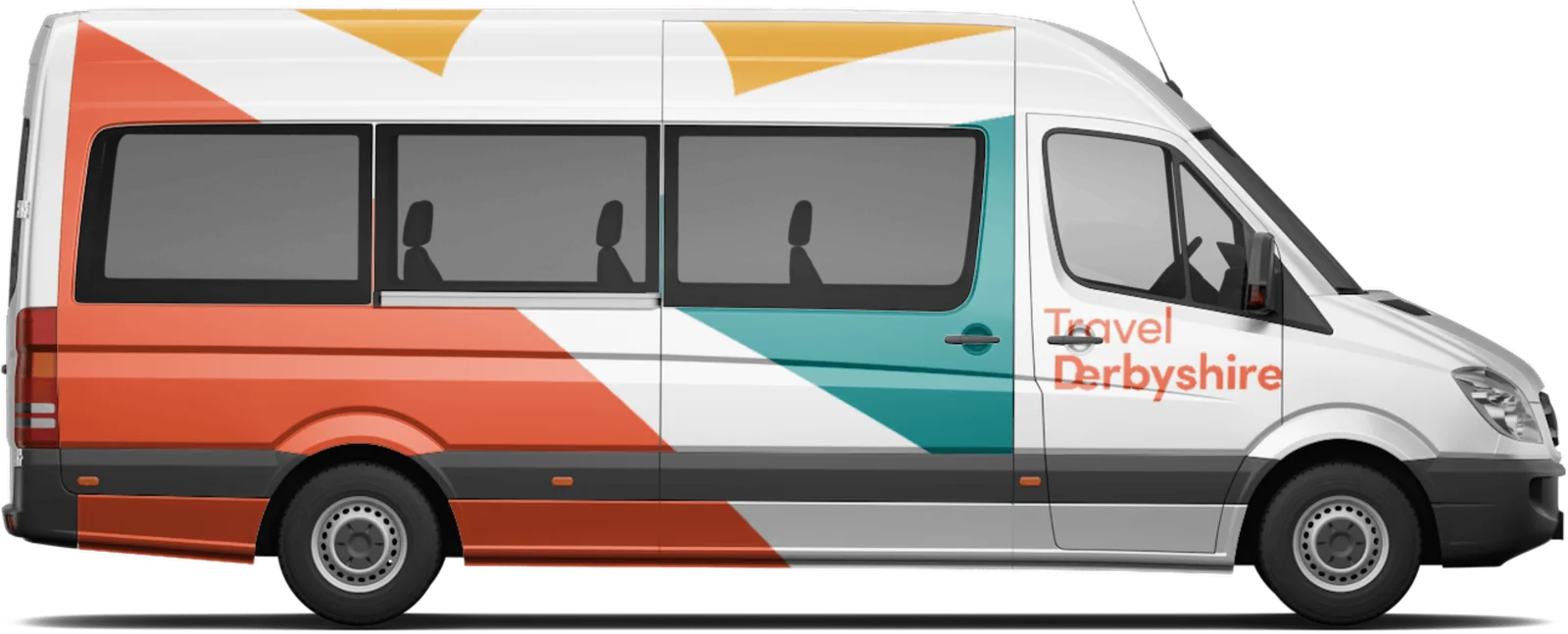
You provide the vehicles and drivers, set your own rules, and switch your services on. Road XS ran the Travel Derbyshire on Demand pilot from February 2024 until it ended in August 2026, blending door to door community transport with virtual bus stops so passengers could meet at convenient points.
Frequently asked questions
What is city transport?
City transport is the network of shared and public services that move people around an urban area, including buses, trams and light rail, taxis, community transport, Dial-a-Ride and demand responsive services. Buses carry the majority of public transport passengers in most UK cities.
What is the most used form of public transport in UK cities?
The bus. There were 4.08 billion local bus journeys in Great Britain in the year ending March 2025, more than twice the 1.83 billion rail journeys made in the year to March 2026.
How much is a single bus fare in England?
Most single bus fares in England are capped at £3, and the cap falls to £2 outside London from 1 January to 31 December 2027. London runs its own bus fares, and Greater Manchester and West Yorkshire run their own fare caps.
Who runs bus services in UK cities?
Private operators run most services, but the Bus Services Act 2025 gives councils in England more control through franchising or by setting up their own bus company. London and Greater Manchester already run franchised networks.
What is bus franchising?
Bus franchising is when a council or combined authority decides the routes, timetables, fares and vehicle standards for its area, and operators bid for contracts to run them. It replaces a market where operators choose their own commercial routes. Greater Manchester's Bee Network is the best known example outside London.
How does GPS tracking work on city transport services?
With GPS switched on, transport software shows the live location of each vehicle and driver on a map. Coordinators can follow journeys as they happen, drivers can navigate to exact pickup points, and passengers can see when their vehicle will arrive.
Can demand responsive transport work in cities as well as rural areas?
Yes. While DRT is often used to connect rural communities, urban schemes such as MK Connect in Milton Keynes show it can replace poorly used fixed routes in cities, cut dead miles and feed passengers into the wider network.
Planning a flexible or demand responsive service in your area? Book a Road XS demo or talk to our team.