




On this day, we pause to honour those who served not only those on the front line, but also the men and women who kept the wheels of war and hope turning behind them.
Transport has always been the invisible backbone of every campaign. From the mud-churned roads of the Western Front to the blistering sands of North Africa, British Army transport units worked tirelessly to connect, supply, and sustain the people who defended freedom. Their courage rarely made headlines, but without them, the fight could not continue.
Today, we remember two of those stories.
The Transport Section of the Great War

It is early 1918, somewhere along the Western Front. The weather is foul, the ground thick with mud, and the thunder of artillery never far away. Amid the chaos, a small transport section from the Army Service Corps (ASC) begins its daily routine: delivering water, fuel, ammunition, and supplies to an infantry battalion dug in at the front.
Their world is one of constant motion and quiet bravery. Each driver handles a team of two horses pulling a heavy wagon, guiding them through cratered roads under threat of shellfire and gas. On this particular morning, one driver sets off to collect water and fuel from a supply dump six miles back. The journey should be simple, but in war, nothing is simple.
When he returns, he finds the main bridge destroyed by shelling. The alternative route adds miles through open terrain, exposed to enemy fire. Instead of turning back, he makes a decision: he leads his horses along a narrow, half-flooded farm track, crossing a shallow ford to rejoin the route. The wagon sinks more than once, but he pushes on.
Hours later, soaked and exhausted, he delivers the precious load. The soldiers at the front receive what they need to survive another night. There are no medals for that journey, just the knowledge that he did his duty.
It’s a scene that played out countless times during the Great War. The transport sections were the lifeline of the British Army. The quiet, unsung network that kept food, ammunition, and fuel flowing through the mud.
As one record from the ASC put it:
“The whole object of the section was to deliver food, water, fuel, post, ammunition and tools … no matter where they were, nor how long it took to reach them.”
These men, and their faithful horses, embodied community in its purest form. They served not for glory, but for others. They carried hope forward, one wagonload at a time.
Desert Tracks and Long Shadows — The Long Range Desert Group

Fast-forward twenty-five years to the burning deserts of North Africa. The British Army has traded horses for engines, but the essence of service remains unchanged.
In 1942, a small convoy of Chevrolet and Ford trucks sets off from a remote base under the pale light of the moon. Their drivers belong to the Long Range Desert Group (LRDG) — a unit famed for daring reconnaissance missions deep behind enemy lines. Yet these men are not heading into battle. Their task is simpler, but no less vital: to deliver water, fuel, and spare parts to an isolated patrol hundreds of miles away.
The desert is unforgiving. There are no roads, only compass bearings, dunes, and the faint shimmer of the horizon. Every mile risks breakdown, enemy aircraft, or the endless monotony of sand.
Midway through, one truck hits a patch of soft sand and blows a tyre. The crew leap out, working silently in the cool desert air, fixing it by the dim glow of the stars. They know a single light could give away their position. Hours later, they find the patrol, hand over the spares, and refill water cans. Without that delivery, the patrol might have been stranded and exposed.
Behind the headlines of tank battles and desert offensives, it was logistics, quiet, efficient, relentless logistics, that kept the British Army moving. The LRDG’s success depended on drivers, mechanics, and local Bedouin guides who built a community of cooperation and trust across cultures and frontiers.
They proved that connection and the ability to reach one another, even in the harshest conditions, is what sustains us in the darkest times.
The Spirit of Connection

Both stories, one drawn by horses through the mud, the other by trucks across the sand, share a common truth. Transport is not just about movement; it’s about connection, resilience, and service.
In war, that connection meant survival. In peace, it means community.
As we stand in silence today, we remember not just those who fought, but those who carried, mended, and delivered. The drivers, mechanics, dispatch riders, and engineers who kept the lines open and the lifeblood of the nation flowing.
Their legacy reminds us that every act of service, however small or unseen, moves the world forward.
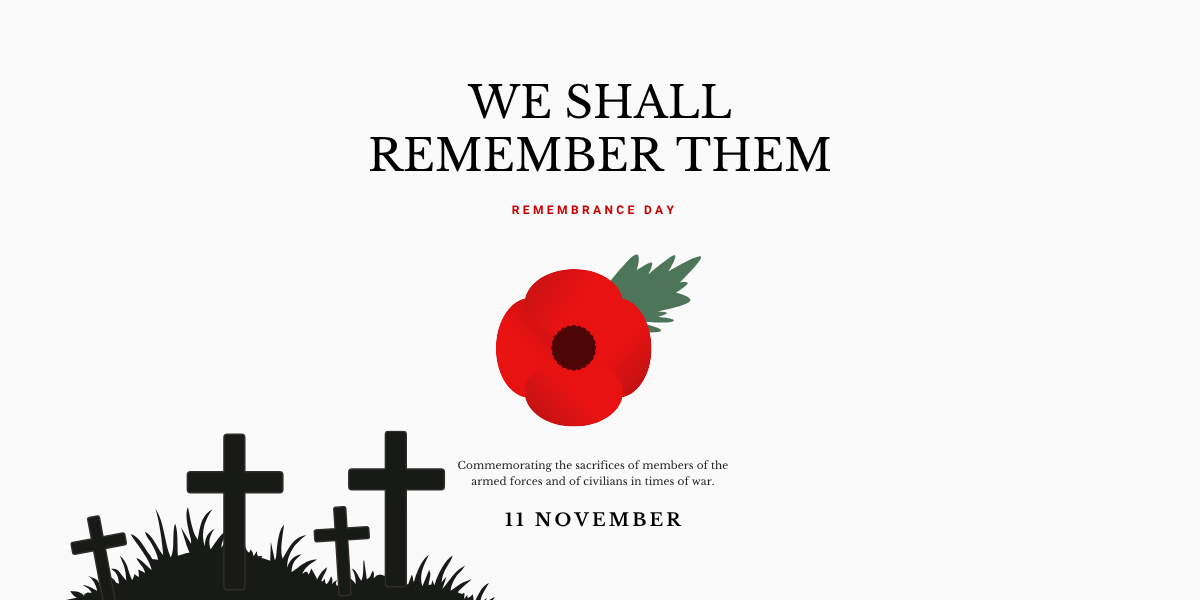
We shall remember them.