



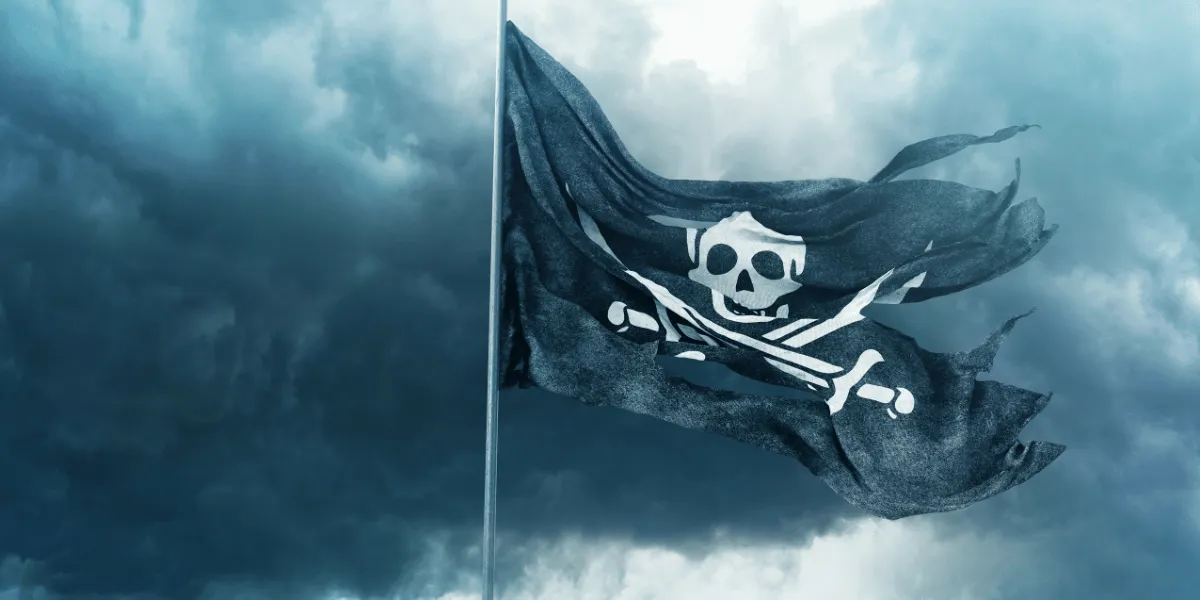
When most people hear the word pirate, they picture rum soaked rogues, treasure maps and swashbuckling adventures on the high seas. History, though, has quietly overlooked another side to piracy.
The most successful pirates were not reckless criminals. They were radical innovators. They tore up the old rulebook, built fairer systems and created waves of disruption that still ripple through society today.
Take a step back and the story of Road XS looks surprisingly pirate like. We have spent years challenging outdated transport systems, refusing to accept the status quo and rewriting the rules of what transport software should be. Along the way we have helped communities and organisations across the UK move forward, safely, securely and with ease.
So what can the transport industry really learn from the pirates of old? And how has Road XS been pirate in its mission to modernise transport? Let us set sail.
Key Takeaways
- Golden age pirates were organisational pioneers who elected their captains, shared plunder on agreed terms and wrote their own codes of conduct.
- Pirate Articles of Agreement even paid injury compensation, roughly two centuries before Britain passed its first workers compensation law in 1897.
- Road XS was built in the same spirit, replacing clunky legacy transport software with lean, cloud based systems designed around fairness, simplicity and security.
- The lessons still hold today: rewrite broken systems, empower everyone in the chain, stay adaptable, protect your data and never stop improving.
Were pirates really the original innovators?

Pirates during the golden age, the era Royal Museums Greenwich places roughly between the 1680s and the 1720s, were far more than mercenaries chasing plunder. During this short but vivid period, thousands of ships across the Atlantic and beyond fell prey to roving crews.
Many of those crews were organisational pioneers. Tired of exploitation by kings, merchants and naval officers, they chose to write their own rules. They voted on their leaders, split rewards fairly and agreed codes of conduct that were far more progressive than most governments of the day.
Pirates valued:
- Democracy: captains were elected and could be voted out if they abused their power.
- Fairness: plunder was divided on agreed terms, with compensation set aside for injury.
- Innovation: they adapted ships, weapons and tactics faster than the navies chasing them.
- Inclusivity: crews were often more diverse and more meritocratic than the societies on land.
In short, pirates did not wait for permission to change things. They saw injustice and inefficiency, and they acted. Sound familiar?
What was the pirate code, and why did it matter?

Before a voyage, many crews drew up Articles of Agreement, a written pirate code that every member had to consent to. It set out how plunder would be shared, how disputes would be settled and how the ship would be led. Historian Marcus Rediker describes these ships as small floating democracies.
The captain was elected and could be deposed if the majority lost faith in him. A quartermaster, also chosen by the crew, acted as a check on his power. Command was absolute only in the heat of battle. Almost everything else was shared.
Most striking of all, the code looked after the wounded. Bartholomew Roberts, known as Black Bart, ran articles that paid 800 pieces of eight to any man who lost a limb in action, with smaller sums for lesser injuries. That is a workers compensation scheme created roughly two centuries before Britain passed its first Workmen's Compensation Act in 1897.
The Road XS pirate code

When we launched Road XS, we surveyed the transport software landscape and reached an uncomfortable conclusion. The old ways were not working. Communities were wrestling with legacy systems that were clunky, dated and out of step with the modern world. Drivers, passengers and operators were forced to work around the software rather than the other way round.
So we wrote our own pirate code for transport software, one that trades outdated thinking for fairness, simplicity and constant improvement.
- No legacy anchors. We refuse to be weighed down by old code or dated design. Instead we build lean, cloud based systems that are always moving forward.
- Fair distribution. Just as pirates shared their haul on agreed terms, Road XS gives everyone in the transport chain, from drivers and administrators to passengers, the tools and information they need.
- Adaptability. Pirates were masters of adapting ships and strategy to the battle at hand. Road XS adapts to many transport models, from community car schemes to large scale contracts.
- Security as a shield. Pirates fortified their ships against attack. We fortify our systems with robust protocols, from two factor authentication to continuous monitoring, so data stays safe.
- Constant evolution. Pirates never stood still. Neither do we. Every update sharpens usability, lifts performance and keeps pace with the latest security standards.
Our treasure is not gold. It is transport that is accessible, fair and efficient for everyone. You can read more about that ambition in our mission.
Why did pirates thrive at the edges?

Pirates operated at the fringes of empire, far from the centres of power. That distance gave them freedom to experiment and adapt at a speed the establishment could never match.
Road XS thrives at the edges too. We do not build for a single niche. We innovate where others hesitate, from real time mapping and simpler driver workflows to managing electric fleets and designing for accessibility.
Much like pirates upgrading their ships to outrun and outmanoeuvre the navy, we keep upgrading our systems to stay ahead of shifting transport challenges. New security rules, emerging mobility models, rising passenger expectations: we meet them head on.
How pirates protected their treasure

One of the biggest myths about pirates is that they lived in chaos. In truth, the successful ones were meticulous about structure and protection. Ships were fortified, plans were documented and crews were drilled to act as one.
Transport today is a digital ocean. Data is the cargo and cyber threats are the privateers hoping to plunder it. That is why Road XS puts security at the heart of everything we do. From strong password management and two factor authentication to compliance with the latest data protection standards, our systems are built like fortified ships.
That foundation runs deep. You can see how we have strengthened it in our Google Cloud partnership, and how we are preparing operators for a digital first future, including the shift towards demand responsive transport. Like pirates guarding their treasure, we guard our users' data, because trust is the most valuable currency in modern transport.
The pirate case for simplicity

Pirates understood the value of simplicity. Their ships, tactics and codes were designed to be understood by everyone, from seasoned sailors to fresh recruits. Simplicity created speed, trust and unity.
Road XS follows the same philosophy. Our interfaces are intuitive, built so people do not need weeks of training to get going. Whether it is a volunteer driver logging journeys or a manager reading reports, we make the complex feel simple.
Legacy systems tend to drown users in needless menus and convoluted workflows. We cut through the clutter with clarity.
Never drop anchor

Pirates never anchored for long. The sea demanded constant motion, and standing still meant being overtaken. Road XS is the same. It is never finished.
Every release moves us forward, whether it improves usability, tightens security or adds new functionality. We stay ahead of new requirements not because we have to, but because we want to. You can see that in the fifteen hidden features we have built in, and in the journey from paper to cloud that so many operators have made with us.
From cloud scalability to electric fleet support, we are steering transport towards the future rather than simply keeping pace with the present.
The treasure map: where we are headed

Pirates did not just live for the raid. Many dreamed of new worlds, alternative societies where fairness and freedom could take root. Our own treasure map points towards a transport system that is:
- Connected, so operators, drivers and passengers are seamlessly linked.
- Sustainable, so electric fleets and greener travel choices are fully supported.
- Inclusive, so accessibility is designed in from the start, never bolted on afterwards.
- Resilient, so systems can withstand disruption and keep earning trust.
We are not just building software. We are helping to reshape how transport connects people and communities.
Six lessons transport can take from pirates

So what can modern transport truly take from the pirates of old?
- Rewrite broken rules. If a system is not working, change it rather than tolerate it.
- Be fair and inclusive. Empower everyone in the chain, not only those at the top.
- Stay adaptable. The world moves fast, so transport systems need to move faster.
- Fortify your security. In a digital age, data is the cargo that has to be protected.
- Keep it simple. Complexity slows progress. Clarity drives action.
- Never stop moving. Innovation is not a destination. It is a way of sailing.
Flying the Jolly Roger of innovation

At Road XS we have always seen ourselves as a little bit pirate. Not the lawless kind, but the kind that tears up stale rulebooks and builds something better. We have challenged outdated transport software, written our own code of fairness and innovation, and created a system that helps people move securely, simply and effectively.
The seas of transport will keep shifting, with new regulations, new technology and new challenges on every horizon. Like the pirates of old, we will keep sailing forward, never anchored, always innovating.
Because the real treasure was never gold. It is a better transport system for everyone.
Frequently asked questions
When was the golden age of piracy?
Royal Museums Greenwich places the golden age of piracy roughly between the 1680s and the 1720s, though some historians stretch it back to the 1650s. It was a short but intense period when thousands of ships across the Atlantic and beyond were targeted by pirate crews.
Did pirates really elect their captains?
Yes. On many pirate ships the captain was elected by the crew and could be removed if the majority lost confidence in him. An elected quartermaster acted as a check on the captain, whose authority was absolute only during a chase or a battle.
What was the pirate code?
The pirate code, or Articles of Agreement, was a written set of rules that every crew member consented to before a voyage. It covered how plunder was shared, how disputes were settled, how the ship was led and what compensation the wounded would receive.
Did pirates have injury compensation?
They did. The articles of Bartholomew Roberts, known as Black Bart, paid 800 pieces of eight to any crew member who lost a limb in action, with smaller sums for lesser injuries. This predates Britain's first Workmen's Compensation Act of 1897 by roughly two centuries.
Were pirate crews more democratic than governments of the time?
In several respects, yes. Elected leadership, shared plunder and injury compensation made pirate ships more egalitarian than the navy or merchant vessels of the era. It is worth remembering, though, that pirates remained violent criminal enterprises, so the comparison has limits.
What can businesses learn from pirates?
The core lessons are timeless: rewrite systems that no longer work, treat people fairly, stay adaptable, protect what matters, keep things simple and never stop improving. Pirates applied these principles out of necessity, and they still translate well to modern organisations.
How does Road XS apply these lessons to transport?
Road XS replaces clunky legacy software with lean, cloud based transport systems that give everyone in the chain the right tools, adapt to many transport models, put security first and improve with every release. The goal is transport that is accessible, fair and efficient for all.