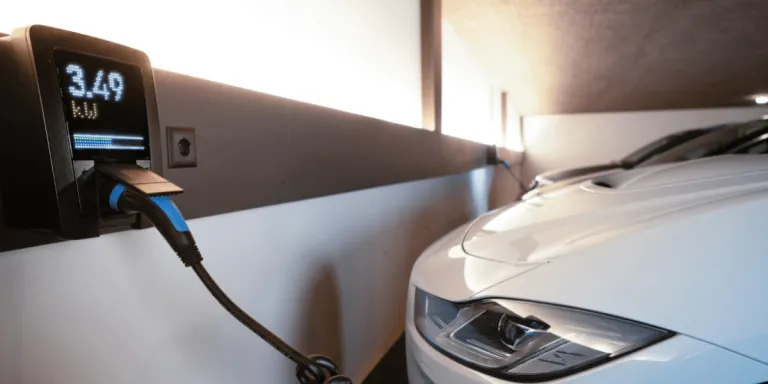






From charging speeds and connector types to public networks and home installation, this beginner's guide covers everything new EV drivers need to know. Learn how to compare costs, choose the right charger, protect your battery, and plan longer journeys with confidence, making the switch to electric far simpler than it first appears.
Key Takeaways
- UK charging speeds fall into four bands: Standard (3kW to 7.9kW), Standard Plus (8kW to 49kW), Rapid (50kW to 149kW) and Ultra-rapid (150kW and above).
- Home charging on an off-peak tariff (around 7p to 8p per kWh) is roughly a tenth of the cost of a public rapid charger, so most drivers do about 80% of their charging at home.
- The two connectors you need to know in the UK are Type 2 for AC charging and CCS for DC rapid charging. CHAdeMO is now a legacy standard.
- There are more than 121,000 public EV chargers across the UK, and the public network is still growing every month.
- Keeping your battery between roughly 20% and 80% for everyday use, and reserving rapid charging for longer trips, is the single best way to protect battery health.
As the UK shifts towards greener transport, electric vehicles have moved from a niche choice to a mainstream one. Yet for newcomers, the mechanics of charging can feel daunting. Few people ever have EV charging explained to them clearly, which is exactly what this guide sets out to do.
Charging is at the heart of the switch to electric. The growth of charging infrastructure has been central to wider EV adoption, changing how we think about refuelling and energy. Below, we cover the basics, the different charging speeds and connectors, real UK costs, home installation, public networks, and simple habits that keep your battery healthy.
What Is EV Charging and How Does It Work?
EV charging is the process of topping up an electric vehicle's battery by connecting it to a charger that draws power from the electricity grid. In simple terms, there are three everyday scenarios: slow or trickle charging from a standard socket, faster charging from a dedicated home or workplace unit, and rapid charging at public locations.
- Slow charging (around 2.3kW): uses a standard 3-pin domestic socket. Best kept as an occasional backup, as it can take a full day or more to charge a large battery.
- Fast charging (7kW to 22kW): a dedicated home wallbox or workplace unit. A typical overnight charge takes roughly 7 to 10 hours.
- Rapid and ultra-rapid charging (50kW and above): found at service stations and charging hubs. These add 10% to 80% of charge in around 20 to 40 minutes.
A charging cable connects the car to the charger, and most EVs pair with an app so you can monitor the battery, schedule charging for cheaper overnight hours, and check progress remotely.
How EV charging actually works
Charging delivers electrical current from a power source into the vehicle's battery. UK homes run on a 230-volt single-phase supply, the same as your other household appliances, which is why a standard wallbox delivers up to 7kW. Some homes and many workplaces have a three-phase supply, which unlocks faster AC charging of up to 22kW.
In the UK and across Europe, the standard AC connector is Type 2, while rapid DC charging uses the Combined Charging System (CCS). The older CHAdeMO connector still appears on some legacy models but is being phased out. The cost of charging is measured in kilowatt-hours (kWh), which makes it easy to compare against the pump price of petrol or diesel.
Why EV charging infrastructure matters
Rapid growth in EV ownership needs a robust charging network to match. The UK network has expanded quickly. According to Zapmap, there were more than 121,000 public EV chargers across the UK by mid-2026, sitting across tens of thousands of locations, in addition to over a million chargers installed at homes and workplaces.
The Department for Transport has confirmed that the number of public EV chargers now exceeds the number of petrol pumps in the country. Networks such as InstaVolt, BP Pulse, Gridserve, Osprey, Fastned and Shell Recharge continue to expand, with weather-protected charging hubs and dedicated electric forecourts becoming a familiar sight along major routes and at supermarkets.
EV Charging Speeds and Levels Explained

You may see charging described using the American "Level 1, 2 and 3" system. In the UK, the more common language is slow, fast, rapid and ultra-rapid. From 2026, Zapmap and the government's Public Charge Point Regulations use four standardised bands, which are worth knowing when you compare chargers.
- Standard: 3kW up to 7.9kW
- Standard Plus: 8kW up to 49kW
- Rapid: 50kW up to 149kW
- Ultra-rapid: 150kW and above
Standard and Standard Plus chargers use alternating current (AC), suitable for homes, workplaces and destination charging. Rapid and ultra-rapid chargers use direct current (DC) to charge far faster. Although rapid and ultra-rapid chargers make up under a quarter of all public chargers, they deliver around 60% of the network's total capacity.
Slow charging: the 3-pin backup option
Slow charging uses a standard 3-pin domestic socket and delivers roughly 2.3kW, adding only a few miles of range per hour. Charging a large battery this way can take well over a day, so it is best treated as an occasional backup rather than your main method. Because a standard socket has no communication with the vehicle, it should never be relied on for regular high-load charging.
Fast charging: the everyday home and workplace choice
Fast charging covers 7kW to 22kW and is what most drivers use day to day. A typical home wallbox delivers 7kW on a single-phase supply, adding around 25 to 30 miles of range per hour. Workplaces and some homes with a three-phase supply can reach 22kW. A smart unit such as an Ohme, Hypervolt or Wallbox charger lets you plug in overnight and charge automatically when rates are cheapest.
Installing a wallbox may require an assessment of your home's wiring, but the payoff is significant. Fast chargers also offer smart features such as app control, load balancing and scheduling, making them ideal for residential, workplace and business settings.
Rapid and ultra-rapid charging: power for longer trips
Rapid and ultra-rapid chargers deliver DC power straight to the battery, bypassing the car's onboard charger to recharge quickly. Operating at high voltages, they are designed for short, powerful bursts, which makes them perfect for motorway service stations and en-route hubs.
Because of their power demands, these chargers are only practical in commercial and public settings, not at home. The actual speed you achieve depends on your car's maximum charging rate, its battery chemistry and thermal management, and how full the battery already is. Charging slows noticeably above 80%, which is why rapid sessions usually target a 10% to 80% top-up.
EV Charging Connectors and Plug Types
Understanding connectors is key to charging confidently. There are two categories of charging station, AC and DC, and a small number of connector types you will encounter in the UK.
AC vs DC charging: the key difference
The difference comes down to where the current is converted. AC chargers rely on the car's onboard charger to convert alternating current into the direct current the battery stores, which limits speed and suits home and workplace use. DC chargers do the conversion inside the unit itself, bypassing the onboard charger and delivering much higher power for rapid charging.
Type 1 vs Type 2 connectors
Type 2, known as the Mennekes connector, is the UK and European standard for AC charging. It supports single-phase and three-phase charging and is used across home and public charging. Type 1, technically SAE J1772, is an older single-phase standard found mainly on early and imported models, and those cars may need an adapter to use modern Type 2 points.
CCS and CHAdeMO: the rapid connectors
For rapid DC charging, the Combined Charging System (CCS) is now the dominant standard in the UK and Europe. It builds on the Type 2 connector by adding two DC pins, so a single port handles both AC and DC. Almost all modern EVs, including current Teslas sold in the UK, use CCS.
CHAdeMO was an early rapid standard, notably on older Nissan LEAF and Mitsubishi Outlander PHEV models. As the industry standardises around CCS, CHAdeMO is being phased out, though some UK sites still offer it so that legacy vehicles keep access to the public network.
How Much Does It Cost to Charge an Electric Car?

Cost is the question most new drivers ask first, and the honest answer is that it depends heavily on where you charge. Home charging on an off-peak tariff is by far the cheapest option, while public rapid charging is the most expensive because you pay for speed and convenience. Your battery size, the charger's power, and your electricity rate all shape the final figure.
According to the Zapmap Price Index, the weighted average pay-as-you-go price in 2026 was around 54p per kWh on Standard and Standard Plus chargers and about 79p per kWh on Rapid and Ultra-rapid chargers. That works out at roughly 16p and 24p per mile. By comparison, charging at home on an EV tariff can cost as little as 7p to 8p per kWh, close to a tenth of the rapid rate.
How to calculate your charging cost

Home charging is not only convenient, it can be very cheap on an off-peak tariff such as Intelligent Octopus Go, which can bring overnight rates down to around 7p per kWh.
How to calculate EV charging costs
Multiply your battery capacity (in kWh) by your electricity rate (per kWh).
Example: a 64kWh battery charged at 7p per kWh costs 64 × £0.07 = £4.48 for a full charge.
Charging to only 80% instead? £4.48 × 0.80 = £3.58.
If you are not on a dedicated EV tariff, the same full charge at the standard price cap rate (around 25p per kWh) would cost about £16, which is still far cheaper than a tank of fuel.
You can estimate running costs more precisely by multiplying your car's energy use per 100 miles by your electricity rate. A home chargepoint typically costs between £800 and £1,500 to install, and it usually pays for itself over time. Charging overnight can cut costs substantially by taking advantage of low-demand periods.
How to calculate your charging time

Charging time depends on the charger's power and your car's maximum charging rate. Remember that a battery does not charge at a constant speed. It often charges faster from 10% to 50% and slows down as it fills, so any calculation is an estimate that gives you a useful planning figure rather than an exact time.
How to estimate EV charging time
Divide your battery capacity (in kWh) by the charger's power (in kW) to get the time in hours.
Home example: a 64kWh battery on a 7kW home charger takes 64 ÷ 7 = about 9 hours for a full charge, or roughly 7 hours to 80%. This is why home charging is best done overnight.
Rapid example: on a 150kW rapid charger, the same car will typically add 10% to 80% in around 20 to 40 minutes, because charging slows down as the battery fills.
A faster charger will not always charge your car faster the whole way, since the car's own limit and the charging curve both apply. Home charging overnight is gentler on the battery and much cheaper than repeated rapid charging, which can degrade battery health over time if it becomes your default.
Public charging costs and how you pay
Public charging costs more because you are paying for speed and convenience. A 10% to 80% rapid top-up on a 64kWh car at the average rate works out at roughly £35, and prices vary widely by network. Among the larger rapid networks, pay-as-you-go rates ranged from about 63p to 92p per kWh in 2026, with Tesla often the cheapest at open sites and InstaVolt and BP Pulse among the priciest. Some networks, such as Sainsbury's Smart Charge and Believ, sit lower.
You can usually pay by contactless card, which is now required on newer and higher-powered public chargers, or through a network app or RFID card. Mobility service providers and roaming apps let you access many networks with a single account, sometimes at a membership rate that lowers the cost per kWh. It is worth noting that public charging currently carries 20% VAT, compared with 5% on domestic electricity, a gap that campaigners continue to challenge.
The financial benefits of switching to an EV
Switching to electric offers real savings, mostly through reduced fuel costs. Running an EV at home can cost as little as 2p to 3p per mile, against roughly 19p per mile for a comparable petrol car at current pump prices. Over a year of average mileage, that difference runs well into three figures and often four.
Smart chargers push savings further by charging automatically when electricity is cheapest, and time-of-use tariffs reward overnight charging. Some drivers also benefit from vehicle-to-grid (V2G) schemes, which let the car feed power back to the grid at peak times. Together these make the long-term economics of EV ownership compelling.
Home EV Charger Installation and Setup

Installing a home charger is an essential step for many drivers, offering both convenience and lower running costs. Home charging lets you take advantage of overnight rates and reduces trips to public chargers. Smart home units from brands such as Ohme, Hypervolt, Wallbox and Easee link to your car and manage charging times automatically, and many let you approve each session from an app so nobody else can plug in.
Steps for installing a home charger
Start by checking whether you qualify for the government's EV Chargepoint Grant. From 1 April 2026, the grant for renters and flat owners rose to up to £500 per socket (75% of the cost), running until March 2027. Owner-occupiers of single houses are no longer eligible, but the scheme is a real help for those without a private freehold driveway.
A standard home charger is an AC unit delivering up to 7kW, enough to fully charge most cars overnight. Pairing a charger with solar panels lets you charge from surplus solar energy, and combining that with an off-peak tariff can cut costs dramatically. Occasionally the charger is included in the car deal itself, as some manufacturers offer a free home unit and installation on certain models.
Choosing a qualified installer
Use an OZEV-approved, MCS-certified electrician for a safe and compliant installation. A professional will check whether your consumer unit and wiring can handle the load, and flag any upgrades an older property might need. Proper installation avoids hazards and means your charger runs at its full rated speed without you having to unplug other appliances.
Public Charging Networks in the UK
Public networks are vital for drivers without home charging and for anyone on a longer journey. In the UK you will find chargers at service areas, car parks, supermarkets, cinemas and increasingly on residential streets. Charge point operators including InstaVolt, BP Pulse, Gridserve, Osprey, Fastned, Ionity, Shell Recharge and Connected Kerb run both AC and DC chargers across the country.
Tesla's Supercharger network has long been a draw for Tesla drivers thanks to its reliability and simple plug-and-charge experience. Many Superchargers are now open to non-Tesla vehicles through the Tesla app, widening fast-charging options for everyone. Strategic placement of rapid chargers at motorway services keeps downtime on long trips to a minimum.
Finding and paying at public chargers
Charger-finder and route-planning apps make public charging straightforward. They let you filter by connector type, speed and network, and many show live availability and pricing so you can plan around cost and convenience.
Useful apps and route planners
- Zapmap, the UK's leading charger map
- A Better Route Planner (ABRP)
- Octopus Electroverse, for roaming across many networks on one account
- Bonnet and Paua, popular for consolidated billing
Compatibility with EV models
Most modern EVs use a Type 2 connector for AC charging and CCS for rapid DC charging, which gives broad compatibility across the public network. Older models such as the Mitsubishi Outlander PHEV rely on CHAdeMO, so their owners need to seek out compatible points. Type 1 cars charging on AC up to 7kW may need an adapter to connect to Type 2 units.
For most non-rapid sessions you bring your own cable, which usually comes with the car. Rapid chargers have tethered cables attached to the unit. If you want a fuller picture of the wider rollout, our guide on navigating the UK's electric vehicle transition covers the challenges and progress in more detail.
EV Charging for Community Transport Operators and Fleets
For community transport operators, dial-a-ride teams and charities running minibuses or car schemes, the move to electric raises different questions from those a single household faces. Depot charging, predictable duty cycles, and the cost of energy for a whole fleet all need planning. Understanding charging speeds and tariffs is the foundation for building a workable EV strategy.
The government's Workplace Charging Scheme is open to businesses, charities and public-sector organisations, offering up to £500 per socket for workplace and depot chargers, capped at 40 sockets per applicant. For operators with off-street parking or a base, this can meaningfully lower the cost of electrifying vehicles that return to a central point each night.
There are practical points for volunteer-based schemes too. Where volunteers use their own EVs, it is worth reviewing how charging costs map to your volunteer driver mileage allowances, since electricity costs differ from fuel. Good transport tracking and scheduling software also helps you plan routes around charging windows and vehicle availability, part of moving services towards sustainable transport.
Operators working in central London should also note that fully electric vehicles are no longer exempt from the Congestion Charge as of January 2026, though registered EVs receive a discount. The ULEZ exemption for electric vehicles remains in place, so an EV fleet still avoids emissions-based charges across Greater London.
Environmental Benefits of EV Charging

Electric vehicles are a meaningful step towards cleaner transport. Charging, whether at home or on the public network, supports the shift to greener energy, especially when the electricity comes from renewable sources such as solar or wind. The lithium-ion batteries used in EVs are designed to last well over a decade, reducing waste and the need for frequent replacement.
Combined with the lower maintenance an EV needs compared with a combustion engine, this supports a smaller environmental footprint. As adoption grows, the cumulative reduction in tailpipe emissions helps improve air quality, particularly in towns and cities.
Reducing your carbon footprint
EVs lower greenhouse gas emissions compared with petrol and diesel vehicles, and the benefit grows as the grid uses more renewable energy. Government incentives, from home charging grants to workplace schemes, encourage more people and organisations to make the switch, while public investment in charging infrastructure keeps expanding access.
Sensible charging habits, such as avoiding constant rapid charging and keeping the battery within a moderate range, extend battery life and reduce waste. Following these practices helps ensure that car schemes and everyday drivers alike contribute to a more sustainable future.
Tips for Efficient EV Charging

Efficient charging protects battery health and smooths out your driving. The single most useful habit is to keep everyday charge between roughly 20% and 80%, which avoids the deep discharges and constant full charges that wear a battery over time. Matching the charger to your car's onboard capacity also keeps things efficient.
Maximising battery life and range
Beyond the 20% to 80% habit, steady driving and gentle braking reduce energy use and stretch your range. Pre-conditioning the cabin while the car is still plugged in, rather than drawing from the battery, saves energy for the road. Eco-mode helps too, prioritising efficiency so you get more from every kilowatt-hour. Our guide to driving electric goes deeper on day-to-day habits.
Planning longer journeys
Long trips are far easier than they once were. Most modern EVs have navigation that locates chargers and plans routes around them. A decade ago a 109-mile Nissan LEAF demanded careful planning, but today's larger batteries and the growth of rapid and ultra-rapid hubs at service stations have largely removed range anxiety. Regenerative braking recovers energy as you slow, adding a little range and improving efficiency.
Charge for only what you need on public chargers
If you have a home charger, treat public charging as a top-up rather than a full fill. Ideally start a long journey at 90% to 100%, then on the road only add what you need to reach your destination or get home. Charging past 80% on a rapid is slow and expensive, so a shorter top-up saves both time and money and frees the charger for the next driver.
As a worked example, adding 20% to 80% to a 64kWh car on a 150kW rapid takes roughly 25 minutes. If you only need to reach 60% to get home, that might take around 15 minutes, costs less, and is kinder to the battery.
Plan your charging around your week
Your EV does not need to be full all the time. If you are only pottering around town, charging to around 80% once and topping up every few days is fine. Try not to let the battery drop below about 10%, since cars use a little power overnight for updates, but there is no need to keep it constantly topped up. You would not refill a petrol car after every short trip, and the same logic applies here.
Finally, set a sensible maximum home charge, such as 80%, schedule it overnight to catch the cheapest rates, and match the charger's power setting to your car's capacity. This matters most on smart tariffs, where charging outside the cheap window can cost you unnecessarily.
Frequently Asked Questions

What is EV charging?
EV charging is the process of replenishing an electric vehicle's battery by connecting it to a charger that draws power from the grid. It happens at three broad speeds: slow charging from a domestic socket, fast charging from a home or workplace wallbox, and rapid charging at public sites.
How long does it take to charge an electric car?
It depends on the charger and the car. A 7kW home charger fully charges a typical 64kWh car in around 9 hours, ideal overnight. A 150kW rapid charger adds 10% to 80% in roughly 20 to 40 minutes. A standard 3-pin socket is far slower and best used only as a backup.
How much does it cost to charge an electric car?
Charging at home is cheapest. On an off-peak EV tariff at around 7p per kWh, a full charge of a 64kWh battery costs about £4.48. The same 10% to 80% top-up on a public rapid charger at the 2026 average of 79p per kWh works out at roughly £35, which shows why most drivers charge at home and use public chargers mainly for longer trips.
How do you pay for public EV charging?
Most public chargers accept contactless payment, which is now required on newer and higher-powered units, as well as network apps and RFID cards. Roaming apps such as Octopus Electroverse, Bonnet and Zapmap Pay let you use many networks through a single account, and membership plans can lower the per-kWh cost if you charge in public regularly.
Should I charge my EV to 100%?
For everyday use, no. Keeping the charge between about 20% and 80% is better for long-term battery health. Charging to 100% is fine occasionally, such as before a long journey, and some manufacturers recommend an occasional full charge to help the car calibrate its range estimate. Check your car's handbook for its specific guidance.
Can you charge an EV in the rain?
Yes. EV charging equipment is designed and rigorously tested to be safe in wet weather. Connectors and charge ports are sealed and weatherproofed, and the system will not pass current until a secure connection is confirmed, so charging in the rain is entirely safe.
Can you use solar panels to charge an EV?
Yes. Many home chargers can be set to use surplus solar energy, charging the car from electricity you have generated rather than drawing from the grid. Combined with an off-peak tariff for cloudy days, this is one of the cheapest and greenest ways to charge.
Are electric cars exempt from the London Congestion Charge?
Not any more. The full Cleaner Vehicle Discount ended on 25 December 2025. From 2 January 2026, fully electric cars registered on Auto Pay receive a 25% discount rather than a full exemption, and electric vans a 50% discount. Electric vehicles remain exempt from ULEZ charges across Greater London.
How do I find charging stations near me?
Apps such as Zapmap, Octopus Electroverse, PlugShare and Chargemap map charging locations across the UK and let you filter by connector, speed and availability. Tesla drivers can also find Superchargers and Destination Chargers through the car's built-in navigation.
Are all EVs compatible with every charger?
No. Compatibility depends on the connector. Most modern EVs use Type 2 for AC and CCS for rapid DC charging, which covers the vast majority of public points. Older cars may use Type 1 or CHAdeMO and can need an adapter or a specific charger. It is always worth checking your car's connector before relying on a particular network.
Summary
EV charging is far less complicated than it first appears. Once you understand the four charging speeds, the two connectors that matter in the UK, and the big gap between home and public charging costs, the rest falls into place. Home charging on an off-peak tariff is the cheapest and gentlest option, while the growing public network keeps longer journeys stress-free.
For organisations, from car schemes to community transport operators modernising their services, the same principles apply at fleet scale, with workplace charging grants and smart planning making electrification more achievable. Drive an EV with a little planning, and the experience is genuinely cheaper, cleaner and less daunting than the switch first suggests.