



Most people who run a transport service did not set out to manage software. They set out to get people to hospital, to school, to the shops or to work. Yet every journey creates data: a booking, a driver, a vehicle, a time, a cost and often a care need.
This guide explains what software for transport management actually does on an ordinary working day. It covers passenger services in the UK, from community car schemes and Dial-a-Ride to SEND transport and NHS patient journeys, and it shows who gains, what it costs to go without, and how to switch safely.
Key Takeaways
- Transport management software links booking, scheduling, drivers, vehicles, tracking, invoicing and reporting, so each journey is entered once and used everywhere.
- Only 37% of community transport operators use journey planning software, and just 2% take bookings by app (Community Transport Association).
- Cost pressure is real. Councils spent an estimated £2bn on SEND school transport last year, heading for £3.4bn by 2030/31 (County Councils Network).
- Passenger transport is not freight. The software must hold mobility needs, carers, eligibility and safeguarding details, not just addresses.
- Choose on your hardest journey, check UK data protection fit, and plan the switch before you sign.
What is software for transport management?
Software for transport management is the system that runs a transport service from first call to final report. It stores passengers, drivers and vehicles, takes bookings, builds schedules, sends jobs to drivers, tracks journeys, raises invoices and produces reports. You may see it called a TMS, transport software or passenger transport software.
The key idea is a single record. A booking is typed once, then flows to the run sheet, the mileage claim, the invoice and the funder report. Without that, the same journey is copied into a diary, a spreadsheet, a text message and an expenses form, and each copy invites an error.
We cover the wider business case in our article on the benefits of transport management software. This guide stays practical and follows the work itself.
What does transport management software do day to day?
The easiest way to understand it is to follow one journey. Imagine Margaret, who is 82, uses a wheelchair and needs to reach an outpatient clinic at 10:30 on Thursday. Her daughter rings to book. Here is what good software does at each stage, and what it replaces.
1. Taking the booking
The coordinator finds Margaret's record in seconds. It already shows her address, wheelchair type, access notes, her daughter as a contact, and any eligibility decision. The booking is logged against the right service and funder. If Margaret prefers to book online or by app next time, the same record is used.
Phone still dominates. The CTA Mapping England research found only 22% of operators take bookings through a website and 2% through an app. Good transport booking software adds online and app channels for those who want them, without taking the phone away from older passengers and carers who rely on it.
2. Building the schedule
Transport scheduling software then fits the journey into the day. It checks which vehicles can carry a wheelchair, which drivers are free and trained, and how the trip sits alongside other bookings. Route planning looks at distance, appointment time and traffic, so Margaret arrives on time and nobody drives empty miles.
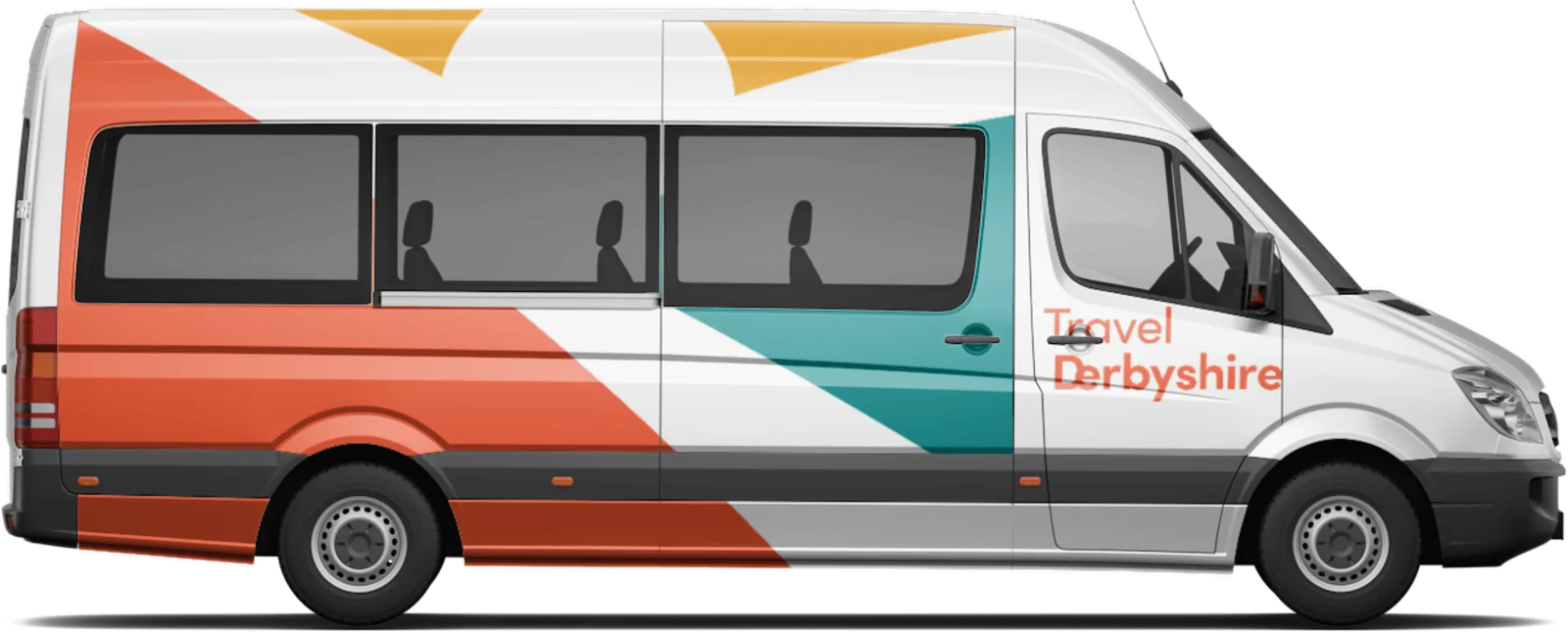
For demand responsive transport, this matters even more. Journeys are grouped as requests come in, so the schedule keeps changing through the day and needs to be rebuilt in seconds, not by hand. See how this works on our DRT software page, and in the Travel Derbyshire on Demand case study.
3. Allocating drivers and vehicles
The system offers the job to a suitable driver, paid or volunteer. It should block anyone whose licence check, DBS check or training is out of date. Vehicle records hold MOT dates, seating plans and permit details, so the wrong minibus is never sent. Volunteers can accept or decline jobs from their phone.
Most community transport runs under Section 19 or Section 22 permits. The Department for Transport guidance sets rules on driver age, licences and vehicle size. Holding those details in one place turns compliance into a simple routine check rather than a stressful scramble before an audit.
4. On the day
The driver sees the job, the address, the access notes and the best route on a mobile app. GPS tracking shows the office where each vehicle is. If the clinic runs late or a passenger is not ready, the coordinator updates the job and the driver sees it straight away.
For carers and families, this is the part that matters most. When Margaret's daughter rings to ask where the car is, the answer takes seconds. Some services also send automatic text updates when the driver is close, which cuts incoming calls to the office and reassures passengers who worry about being forgotten or left waiting.
5. After the journey
Once the driver marks the trip complete, the software records times and mileage. It can calculate volunteer expenses, create the invoice at the right contract rate and add the trip to reports. A council SEND contract, an NHS trust and a private passenger can each be billed correctly from the same week of work.
Reports then answer the questions funders and boards ask. How many journeys, to which destinations, for which groups, at what cost, and how many were turned down? That last figure is powerful evidence when you ask for more money or more drivers, and it is almost impossible to produce from paper.
Why is passenger transport different from freight?
Search for transport management software and most results describe freight. Those systems plan loads, pallets and delivery windows. They are good at cost per mile. They are not built for a passenger who needs a carer, a ramp, a regular driver they trust, or an appointment that cannot move.
| What the software must handle | Freight TMS | Passenger transport software |
|---|---|---|
| What is moved | Goods and pallets | People, often with care or mobility needs |
| Key record | Consignment and load | Passenger profile, carer and eligibility |
| Vehicle match | Weight and volume | Wheelchair space, ramp, seating plan |
| Workforce | Paid drivers | Paid drivers and volunteers, with DBS and training |
| Who pays | Customer per shipment | Councils, NHS, grants and passengers, often in one week |
| Data risk | Commercial data | Health and safeguarding data under UK GDPR |
Health journeys add formal rules too. NHS England eligibility criteria for patient transport cover medical need, mobility need, cognitive or sensory impairment and safeguarding concerns. Software for these services should record which criterion applies and who assessed it, so decisions stay consistent and can be explained if a patient or family challenges them.
Who benefits from transport management software?
Almost everyone who touches a journey gains something. The benefits look different depending on where you sit, so here is a quick guide by role.
- Coordinators and transport managers spend less time on the phone and on spreadsheets, and more time solving real problems.
- Drivers and volunteers get clear jobs, accurate addresses and quicker expenses, which helps keep them.
- Passengers, carers and families get reliable pickups, fewer missed journeys and quick answers.
- Charity CEOs, trustees and boards see the true cost of each service and can evidence impact to funders.
- Council decision makers and councillors gain clear data on SEND, home to school and local government transport spend.
- NHS transport leads and buyers can track eligibility, on time arrivals and cost per journey for patient transport.
- Facilities, operations and HR teams can run staff shuttles and sensitive transfers with a full audit trail.
Volunteers deserve special mention. The same CTA research found 67% of operators did not think they had enough volunteers to meet demand, and 37% had seen recruitment fall. Software cannot recruit drivers, but it can stop you wasting the time of the ones you have.
See a journey run from booking to report
Bring your most complicated journey and we will show you how Road XS handles it, step by step.
What does it cost to run transport without software?
The sector is still largely manual. The CTA found that 37% of community transport operations use journey planning software, and among those it counted 17 different systems. That leaves most operators still planning on paper, whiteboards and spreadsheets while demand keeps rising and volunteer numbers keep falling.
The costs of that approach are easy to miss because they are spread thin. They show up as hours of retyping, journeys that fall through the gaps, drivers sent to the wrong address, invoices raised late, and reports built by hand the night before a grant deadline.
- Lost capacity. Without a live view of vehicles and drivers, spare seats go unused.
- Unmet demand you cannot prove. Refused bookings are rarely recorded on paper.
- Slow cash flow. Invoices depend on someone matching run sheets to rates by hand.
- Data risk. Paper run sheets carry health details that can be lost or seen by the wrong person. Our paper run sheets guide explains the risks.
Public budgets feel it most. The County Councils Network estimates councils transported a record 206,000 children and young people with SEND last year. SEND pupils now cost close to £10,000 each on average to get to school, and total spend could reach £3.4bn by 2030/31.
Better software will not fix SEND policy. But it helps councils and operators see where money goes. Local Government Association research found 46% of SEND journeys in 2025 were by minibus and 22% by car. Knowing which runs could be shared or rerouted is where real savings start.
Demand responsive services show the same pattern. The Rural Mobility Fund interim evaluation for the Department for Transport found 13.0% to 18.9% of booking requests across five schemes did not become journeys. You can only reduce that figure if your system records it in the first place.
Should transport management software be cloud based?
For most UK services, yes. Cloud based software runs in a secure data centre and is used through a browser or app, so staff can work from the office, from home or on the road. Updates arrive automatically, and there is no server in a cupboard that fails on a bank holiday.
Cloud does not mean careless. The National Cyber Security Centre publishes 14 cloud security principles for choosing a provider, covering areas such as data protection in transit, separation between customers and secure staff access. Ask any supplier to show how they meet them, in writing.
Data protection law has also moved on. The ICO confirms that all data protection provisions of the Data (Use and Access) Act 2025 are now in force. It amends UK GDPR rather than replacing it, and every organisation now needs a process for handling data protection complaints.
Passenger records often reveal health needs, so they need careful handling. Look for role based access, so drivers see only what they need, plus audit logs, UK or adequate hosting, and clear rules on how long records are kept. You can read how we approach this on our security page.
How do you choose and switch transport management software?
Treat the choice as a service review, not a software purchase. The right system is the one that fits how your journeys really work, including the awkward ones. These steps help charities, councils and NHS teams make a decision they will not regret in two years.
- Map your journeys. Count them by type, funder, vehicle and passenger need before you speak to anyone.
- Test your hardest journey. A wheelchair user with a carer and a fixed appointment tells you more than a shopping run.
- Check UK fit. Permits, licence and DBS records, eligibility and UK GDPR should be built in, not added later.
- Let coordinators and drivers try it. If the people who use it daily dislike it, adoption will fail.
- Compare the full cost. Look at setup, training, migration and support, and watch for per user fees that punish volunteer teams. See our pricing for one approach.
- Plan the switch. Agree who moves your data, how long it takes and how old records are kept.
Councils and other public bodies must also follow the Procurement Act 2023, which came into force on 24 February 2025. It aims to make buying simpler and more open to smaller suppliers, which can widen the choice of specialist passenger transport software beyond the usual large vendors.
If you are leaving an older system, count what it really costs you today. Our guide to the hidden costs of legacy transport software covers the staff time, data risk and missed savings that rarely appear on the supplier's invoice but still drain your budget every year.
Every journey, every driver, in one place
See how Road XS handles bookings, volunteers, vehicles and reporting for UK transport teams, with unlimited users and vehicles.
Frequently asked questions
What is transport management software?
Transport management software is a system that runs a transport service from booking to report. It holds passenger, driver and vehicle records, builds schedules, sends jobs to drivers, tracks journeys, raises invoices and produces reports. In passenger transport it also records mobility needs, carers and eligibility, so each journey is planned safely.
Is transport management software the same as fleet management software?
No. Fleet management software looks after the vehicle, covering servicing, fuel, tracking and defects. Transport management software looks after the journey and the passenger, covering bookings, scheduling, drivers and billing. Many passenger transport platforms include basic fleet records, while larger operators sometimes run both types of system side by side.
Do small community transport schemes need transport software?
Usually, yes. The trigger is not fleet size but how many people need the same information. Once bookings outgrow one coordinator's diary, or more than a handful of volunteers are involved, spreadsheets start losing journeys. Even a small car scheme gains from accurate records, simple expenses and reports that satisfy funders.
How much does transport management software cost in the UK?
Prices vary widely. Some suppliers charge per user, some per vehicle and some a flat subscription. Compare the total yearly cost, including setup, data migration, training and support, rather than the headline monthly fee. Per user pricing can become expensive for services that rely on large numbers of volunteers.
Can transport management software handle volunteers and paid drivers together?
It should. Mixed teams are normal in community transport. Look for separate records for volunteers and staff, availability settings, job offers by app, licence and DBS expiry alerts, and automatic mileage expenses. The system should treat volunteers as valued drivers rather than forcing them into processes designed for employees.
Is cloud based transport software secure?
It can be very secure when chosen carefully. Ask suppliers how they meet the National Cyber Security Centre cloud security principles, where data is hosted, who can access it and how long it is kept. Role based access, audit logs and encryption matter because passenger records often reveal health needs.
How long does it take to switch transport management software?
It depends on the size of the service and the quality of existing data. A small scheme may move within weeks, while a larger operator should plan a phased switch. Agree data migration, training and a go live date in advance, and run old and new systems side by side briefly if possible.