


Use case · Demand responsive transport
DRT Software
Transport that adapts to passenger demand in real time.
Passengers book themselves onto journeys in a few taps, routes rebuild the moment demand changes, and drivers navigate to each pickup down to a three metre square. Built for councils, community transport operators and NHS transport teams, and the most straightforward DRT software you will use.
DRT is the future of transport
Flexible services, not fixed timetables
Fixed routes leave half-empty buses running past the people who cannot reach the stop. Demand responsive transport flips that around: the vehicle goes where the passengers are, and the route is rebuilt as the day unfolds. It works best exactly where conventional public transport struggles, in rural areas, low-demand corridors and off-peak hours.
Dynamic routing
Routes that rebuild as demand changes
Add or remove a passenger and the route rebuilds instantly. Road XS recalculates pickup windows, arrival times, transit durations and vehicle capacity the moment anything moves, so your service flexes around real demand rather than a timetable printed last spring.
Live route
Rebuilt at 09:42
One booking added, the whole journey recalculated.
Vehicle 2
What will actually fit
Capacity checked before the passenger is offered a slot.
Planning
Worked out for you
The calculations that used to eat the morning.
Booking channels
Booked by app, or booked by phone
Passengers book themselves through your app, or ring the office and have somebody do it for them. Both routes land in the same system, so a service can be modern without leaving behind the people who would rather talk to a human.
Passenger app
Booked in four taps
Where, when, confirm, and track the vehicle in.
Call centre
Same system, different door
Nobody is excluded for not owning a smartphone.
Return journey
Both directions, one booking
Nobody is left waiting outside a clinic.
Drivers
The people behind every journey
DRT turns shifting demand into real journeys, and it is your drivers who make that happen. They get a dedicated portal and app to set their availability, see the day as it changes and navigate to each pickup precisely, so more of their shift is spent driving.
Driver app
Updated, not phoned
Changes reach the driver as they happen.
Navigation
Three metres, not three streets
Handed to the maps app they already use.
Availability
Set by the driver
Scheduling works inside the hours they give.
Efficiency
Fewer empty miles, lower cost per journey
By grouping passengers and calculating the route the moment a booking is made, Road XS cuts the miles your vehicles run without passengers on board. That is what makes a flexible service affordable to keep running.
Optimisation
Three passengers, one run
Grouped at the moment of booking, not afterwards.
Timings
The road, not the ruler
Schedules built on real travel times.
Fares
Calculated on completion
Your fare rules, applied every time.
Protocols
You stay in complete control
Smart routing built around an algorithm configured to suit your service. Run first come, first served, or hold journeys for ongoing optimisation across every vehicle. The protocol is yours to choose, not ours to impose.
Protocol
Confirmed on the spot
Simple, predictable, and instantly understood.
Protocol
Optimised across the fleet
For services where volume makes it worthwhile.
Reporting
The numbers they ask for
Recorded as the service runs, not reconstructed later.
Still deciding
The things people ask us first
If yours is not here, just ask. You will get a straight answer from someone who knows the software.
DRT is a flexible form of public transport that adapts to where passengers actually want to travel, instead of running a fixed route to a fixed timetable. Vehicles are routed around real bookings, which makes it far better suited to rural areas, low-demand corridors and off-peak hours where a conventional bus service struggles to justify itself.
A bus route runs whether anybody is on it or not. A DRT service is built from the journeys people have asked for, so vehicles go where the demand is. Passengers book in advance by app, phone or website, and the software schedules and routes the vehicles around those requests.
In low-demand areas it usually does, because you stop paying to run near-empty vehicles along fixed routes. The saving comes from grouping passengers well and cutting the miles run without anybody on board, which is exactly what the optimisation is for.
No. Plenty of DRT passengers book by phone through your office, and that booking lands in the same system with the same optimisation behind it. A service can be genuinely flexible without excluding people who do not own a smartphone.
Yes. You can run first come, first served, where a booking is confirmed on the spot, or hold journeys for ongoing optimisation across the whole fleet, which is coming soon. The protocol is configured around your service and can change as your service does.
Their app shows the day as it stands, updating whenever a route rebuilds. Each pickup carries a what3words square accurate to three metres, and navigation hands off to whichever maps app the driver already uses.
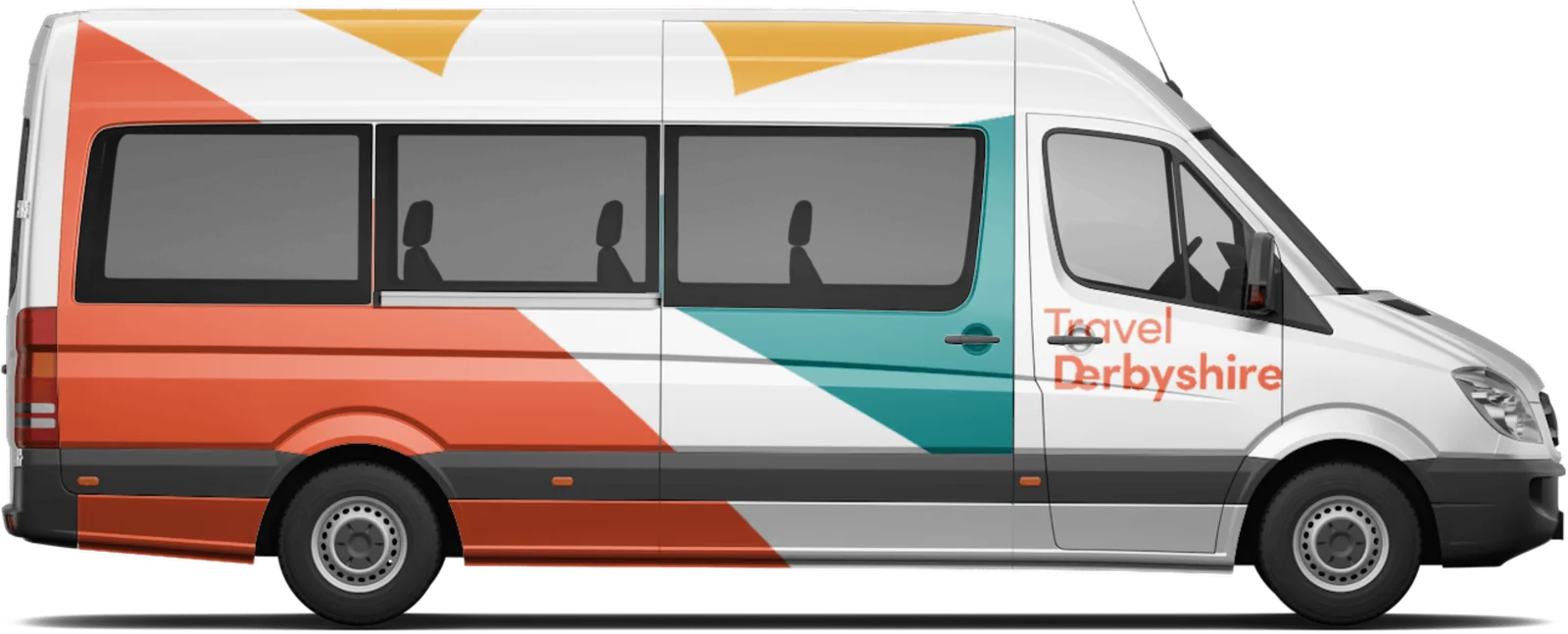
That is where DRT tends to earn its keep. Travel Derbyshire on Demand pilot covered a 230 square mile zone with just two vehicles. Talk to us about the area you cover and the vehicles you have, and we will be straight with you about whether it fits.