


After always having driven petrol and diesel cars, I recently found myself at a crossroads. My car's PCP deal was ending, and like many, I was torn with the idea of driving electric.
Perhaps a hybrid would be more sensible in these scenarios? After all, usually I'd just swap out for another petrol and carry on as usual, but this time felt different.
The EV market has matured, the technology has become more refined, and thanks to some rather aggressive "unintended" pricing changes by Tesla (let's just leave it there), the numbers made sense.
One month in, and I wanted to share what it's been like to go fully electric. Not from a YouTube influencer or corporate review, but as someone who has just gone through the switch in real life and taken the leap.
Here's what I have found in my first 30 days of driving electric.
Key Points
- Charging at home overnight on a smart tariff such as Intelligent Octopus Go costs around 7p/kWh, against a UK public slow and fast network average of roughly 52p/kWh in mid 2025.
- The UK now has more than 82,000 public charge points, and a new one is being added roughly every half an hour.
- The government's new Electric Car Grant, launched in July 2025, takes up to £3,750 off eligible new EVs priced at or under £37,000.
- Around one in five new cars sold in the UK is now fully electric, with battery electric vehicles reaching 19.6% of the market in 2024 and climbing through 2025.
- New petrol and diesel cars are due to be phased out from 2030, so driving electric is becoming the default rather than the exception.
- In practice, range anxiety fades fast once you charge at home, one pedal driving and regenerative braking put charge back into the battery, and maintenance so far has been close to nothing.

Fuel Prices You Can Rely On
One of the most immediate benefits has been cost control. With Intelligent Octopus Go, I'm charging my car overnight at just 7p/kWh. Even if I need to charge during the day, it's capped at 27p. But the best part? The system cleverly shifts some charging into low demand daytime slots too, so you often get the cheaper rate without thinking about it.
To put that into context, the average cost of using the public slow and fast network in the UK sat at around 52p/kWh in mid 2025. Charging quietly at home overnight is a different world entirely.
There's no panic at the pumps, no surprise price hikes thanks to global events, just no stress. It's a much more stable, predictable way to "refuel" your vehicle, and cheaper than any petrol or diesel option I've had before. I am also acutely aware that I am now driving a zero emission vehicle, too. It has even brought my overall running costs down thanks to the benefits in kind treatment for electric company cars.

Goodbye Range Anxiety
The fear of running out of battery fades fast. I changed the battery view setting from estimated mileage to total percentage, and it just makes more sense this way. It stops you obsessing about the electric car range.
Once you realise you're charging at home (which, if you think about it, is basically like having your very own petrol station at home), it becomes second nature. I keep the battery between 65% and 80% most of the time. For longer journeys, I raise it to 90% to account for potential climate control and Sentry Mode whilst out and about.
I've found I'm getting better mileage than I was with my previous petrol car. The vehicle is just more efficient, and regenerative braking from one pedal driving even adds mileage back into the battery. Who knew?
I've also been using A Better Route Planner (ABRP), which has been brilliant for determining charging stops under real world conditions, and its built in range calculator.
One thing you learn quickly. It's not just about getting to your destination, but also making sure you've got enough to move around, too, at your destination. If you're parking up somewhere without a charger for a few days, that kind of planning becomes second nature.
This may sound odd, but because I knew petrol stations are everywhere, I would often push my previous car perhaps a little too close to the empty mark at times, which used to weirdly stress me out way more than I have ever felt in an EV (so far). For me, forward planning, at least when it comes to driving, could actually be a good thing. Driving electric, you kind of have no choice.
Another interesting thing, which makes complete sense and ties into the nonsense online, is that if you run your air conditioning, drive like a madman, and use heavy braking, guess what? You run out of fuel faster, just as you would run out of your battery range faster, too. The two go hand in hand.
One thing I will say, though, about electric vehicles is to make sure you get a heat pump. This means that your vehicle won't be using the battery to heat up or cool down, using up your battery's range before you've even started.

Power When You Need It (Horizontal Launches Included)
Most of the time, I drive in chill mode, which is an incredibly smooth and economical driving experience. But when I need to get past slow moving traffic, switching to standard mode unleashes all the instant torque. It's quick. I mean, really quick. And that makes a difference when you need it most.
This is kind of embarrassing, but during my test of the Tesla (whereby I was allowed to have it overnight to test things further), I stopped off and bought a couple of bottles of cider (ironically not even for me).
I placed them both in one of the deep pocket holders (they're more like internal buckets) on either side of the primary boot space and thought nothing of it.
What I hadn't factored in was, due to the instant Tesla torque when pulling away from traffic lights, junctions and joining the motorway, and also given the fact I was on a test drive with free charging, I didn't exactly take it easy. In fact, I was quite enjoying the feeling of a "horizontal launch".
When I arrived at my destination, I discovered what could best be described as a cider crime scene.
The bottles were completely smashed, and the cider was all over the boot, as well as deeply embedded in the boot's interior. The glass shards were as large as, as well as being the size of, atoms.
They had had a smashing time.
I used the car's climate control, setting it to max, to try and dry the boot out as best I could.
Handing it back the next day, I sheepishly explained what had happened. The sales guy looked at me like he couldn't tell whether I was complaining or complimenting the car. I mean, it wasn't exactly a bug, just an unexpected feature of my spirited driving.
I left a little red faced, but it still makes me laugh because that would never have happened in any of the previous cars I have owned.

The Home Charger Makes It Effortless
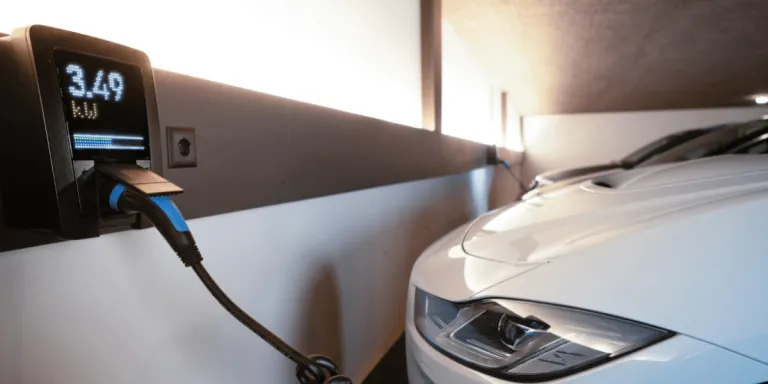
If you're going fully electric, a home charger to use as your primary charging point is a must. I had the Ohme Home Pro installed (with a grant), and it's been flawless. It syncs perfectly with Octopus, handles all the smart charging, and means I never have to think about it. I plug in, walk away (and approve the charge, a handy security setting), and wake up with a charged battery ready for the day ahead.

Why Leasing Made More Sense Than Owning (At Least for Now)
Rather than go down the PCP route again, I chose to do an electric car lease, and so far I'm glad I did. It reduced my monthly costs and provided me with access to more technology for less. More importantly, I don't have to worry about the long term health of the electric car batteries and battery performance, as that will exceed the lease.
Most EVs come with 5 to 8 year warranties (some up to 200,000 miles), so for the length of a lease, it's a non issue. In a few years, the tech will have moved on, and so will I. I think there will just be a better standard of cars out there by then, when other car manufacturers have ironed out all of their tech bugs relating to digital keys, range calculations, and so on.

Tesla's Technology Has Been Seamless
I didn't buy a Tesla for the badge, and believe me, on the test drive, I wanted to hate it. But having tested five other EVs (admittedly to learn more about how EVs work than anything else, without the risk), it was the tech that sold me. Everything works. After all, they have been at it for over 10 years and are responsible for the EV market (at least at a mass scale).
The navigation, phone integration, live traffic updates, and automatic updates with lots of useful features. It all just works beautifully. Even the digital key, which most others struggle with, just works. The range predictions are accurate and reliable, and I haven't had a single glitch (albeit I'll add that there hasn't been one yet).
The only "amusing" incident I had was when my VPN was connected, and the car just said, "Check your internet." I thought, here we go, the first issue. But no, turns out the car didn't like the idea of me being in close proximity, yet seeing I was trying to connect from a foreign country. Fair enough, I wouldn't like that either if it hadn't been me. So, I'm actually glad the car tried to lock me out and disable its core functions via the app when I'd forgotten to turn my VPN off.
Since I use the vehicle for work, I also have the benefit of claiming mileage. The savings from not paying for fuel have been genuinely noticeable compared to my previous car, and it still feels surreal.

Superchargers: I Have Used Them Once
I've only used a Tesla Supercharger once, when I picked the car up and had about 10% charge. Classic, I know.
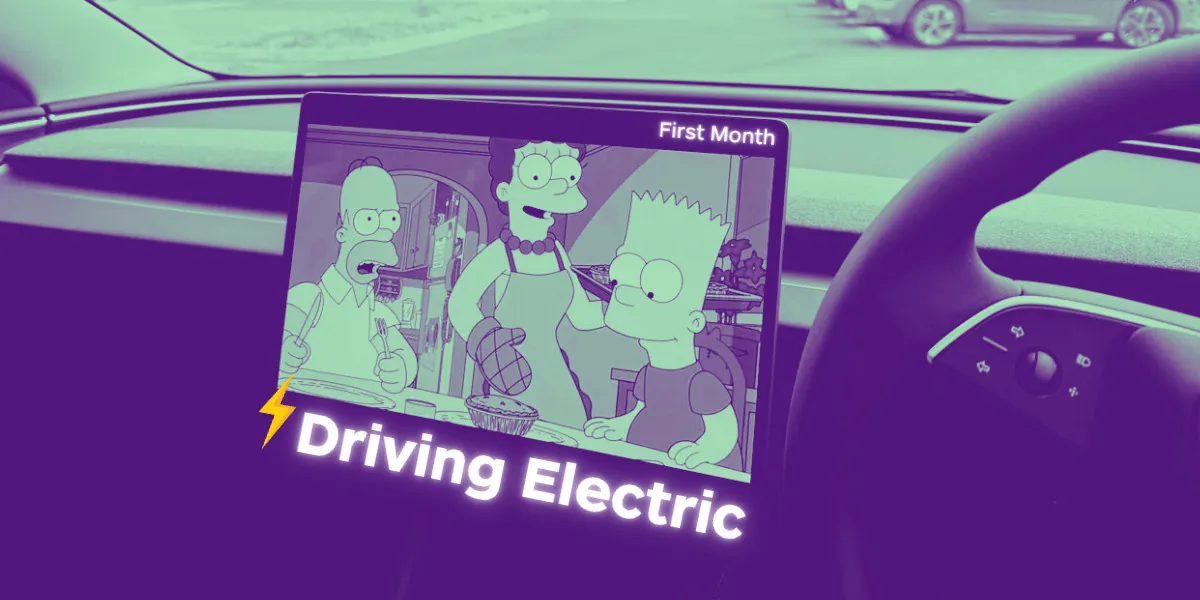
The good news was that it was charged before I'd even finished watching an episode of The Simpsons on the large tablet sized screen (see the main image for this article).
Since then, I haven't needed to use it or any other public charging points. Home charging has covered everything with ease. That said, the Supercharger experience was seamless. No app, no card, just plug in, and it recognises your vehicle.
A benefit of Tesla is that you get the lower charging rates if you do need to use one, and it was kind of amusing watching people fiddle about with their other EVs trying to make it work. I just thought, imagine it's winter, minus 6 degrees C, and you're out there working it all out. Tesla works. However, I must admit that I believe other car manufacturers will soon catch up to and surpass Tesla, making it interesting to see what happens next.

You Don't Ever Charge From 0% to 100%
This was a mindset shift, especially from the nonsense spoken online. You don't ever "fill up" an EV like you would with a petrol vehicle. It's all about topping up as needed. Most nights, I charge around 20%, and the Ohme charger does all the heavy lifting. You're rarely running low, because the system keeps everything topped up in the background. Working remotely when not travelling far, it really is only 1% to 5% at a time, covering local travel. Last night's charge, for example? 17p. That's it. Just pure electric power.

Remote Control and Comfort at Your Fingertips
The app is a game changer. I can pre cool the cabin before getting in, send routes to the car, or unlock it with my phone without even needing to touch the phone. I do keep the keycard in my wallet just in case, but I've never needed it. It's all surprisingly slick.

Autopilot and Adaptive Cruise
Autopilot is excellent on the motorway. Smooth, stress free, and accurate. It's unnerving having a car drive itself, but I was under no illusion this would ever be full self driving (FSD). Nor did I want that.
For this reason, I kept only the basic autopilot, and it's more than enough. Around town or on country roads and A roads, I switch to adaptive cruise control, which keeps me at a safe distance and takes the edge off urban traffic. It's not self driving, but it's a very welcome assistant.
I had it in the previous vehicle, but this is so much smoother. Best of all, it also improves your range, which is not something that has mattered to me yet.

One Pedal Driving is Addictive
Regenerative braking is one of those features that you wonder how you ever lived without. I rarely touch the brake pedal. Just easing off the accelerator slows the car and recovers energy.
On a few journeys, I've even added 3% to 4% back into the battery. It's smoother, easier, and makes driving feel more connected.
The interesting part is that if you have a route planned in, the car knows you're turning, where and when, and so it naturally adds more power to the regenerative brake, ensuring you never travel too fast approaching a turn.
Equally, my biggest fear was speeding in an EV due to the power of the batteries. It has surprised me how often, as you approach a 30mph zone, the car is already thereabouts, and a quick lift on the pedal is all it takes to bring you down to speed. It's impressive.

Forward Planning Means No Stress When Driving Electric
The idea that you'll be stranded without a charger is overblown. I plan ahead, know where the charge points are, and have never had an issue. With more than 82,000 public charge points now across the UK, and a fresh one being added roughly every half an hour, the network is filling in fast.
Unlike petrol and diesel vehicles, driving an EV just requires a different mindset. Once you adjust, it's second nature. I think of it like a pilot might make a flight plan. You just have to think ahead and be a bit more organised.

The Tesla Supercharger Network is Class-Leading
If you're going to drive long distances, the Supercharger network is just excellent. It's fast, reliable, and incredibly easy to use. No apps. No delays. Just plug in and get going. It's what all public charging should aspire to. Knowing and seeing how busy they are in advance is also a plus. I haven't used them much, as I mentioned, but I know when I need to, I'm aware that there's no problem there and no need to mess around with multiple charging apps.
The way they have designed the network means there's never really more than one further than 250 to 300 miles away. What's great is that they have now opened the network to other vehicles too, meaning it benefits anyone considering going electric and taking long drives.

Driving Electric Has Been (Surprisingly) Fun
EVs aren't just practical, they're fun. I've remotely changed the lock sounds for a laugh, made the car make noises that amused passers by, and enjoyed watching Netflix while waiting out a rainstorm at a tennis match. I haven't even touched the built in games yet (and probably won't).
The built in weather and feedback on my driving are also insightful, and even if someone broke in, the car's technology would prevent them from going anywhere. Thank you, "Pin to Drive".
Sentry mode has proven useful too. It's like having a CCTV system built into the car. The dashcam has already caught some shocking driving moments, including a motorcyclist narrowly avoiding disaster, and it's strangely reassuring to know your vehicle is quietly keeping watch and tells you of any events when you get back.
The weirdest part of all? How quiet it is. At night, it feels like I'm gliding through the air. You hear the tyres and nothing else (until, of course, you turn on the music).

Maintenance? Virtually None
Okay, there shouldn't be any right now, but so far, the only thing I've done is top up the washer fluid and pump up my tyres. That's it.
There will be no oil changes. No routine servicing. No faff. The car continues to improve with over the air updates. It's genuinely like driving an app with wheels.
Apparently, the first "service" will be in about two years, and it'll be a case of potentially swapping tyres around then too (all included in the lease). Ironically, the service may even be remotely completed to check that everything is working as it should, such is the connected world of EVs. An additional massive cost saving.

So What's the Catch?
Since driving electric, honestly? I'm still waiting for it.
One month in, and the switch to electric has been one of the easiest transitions I've made.
After getting my head around the different way of thinking, charging instead of refuelling, planning instead of winging it, it's far simpler than the media often makes it out to be. The technology in the car makes this really easy, but also running a technology company probably helps a little bit here, especially given that we also provide transport software full of modern technology.
Driving electric over the past month has made me reflect on where the transportation industry and its sectors are heading.
At Road XS, we're already thinking about what an electric community or commercial fleet looks like, how journey scheduling will adapt, how we'll support drivers with live charge data, and how best to optimise route planning for electric ranges and infrastructure.
This shift isn't just for early adopters anymore. It's a clear signal of what's ahead for transport operators across the country.
It'll be interesting how my first real road trip goes next month to Land's End, where I then hop over to the Isles of Scilly. That's where things will be put to the test.
However, I already know where I will be charging, and I already know I can trust the car to determine how much energy I need to store, so that on my return from the little islands 28 miles southwest of Land's End, the vehicle will still be able to take me home.
So far, so very good.

Questions I've Been Asked
I thought it might help others with some of the questions I have been asked since having it.
Would You Go Back to Petrol?
Based on the last month, no. It's so refreshing not having to buy fuel. Petrol stations feel archaic now. World events don't impact the price of charging a car either. It's a fixed cost when charging from home. However, I do miss chatting with some of the service personnel. They can be a good way to start the morning.
Which Vehicles Did You Test Drive?
I tried a few. The Volvo EX30, Kia EV3, Polestar 4, BYD Sea Lion, the refreshed Tesla Model Y and Model 3, and the Hyundai Kona and Ioniq 5.
Why Tesla?
If I had my pick, I would've gone with the Polestar 4. It was the front runner for me. But when it came down to it, the lease deals on electric vehicles, combined with the business and company car benefits, suddenly made previously out of reach cars much more accessible. Factor in the fuel savings, and it all starts to make financial sense.
Unfortunately, the Polestar was delayed and didn't align with the end of my PCP term. I looked at other options, but many felt a bit glitchy or lacked polish, except the Kia EV3, which I thought was a genuinely good EV. Sadly, the lease deals weren't competitive. It was far better on a PCP.
The Volvo EX30 was another consideration, but it seemed overpriced for what you get. In comparison, the Tesla Model 3 came in hundreds of pounds a month cheaper, with more tech and a larger, more established ecosystem.
Thanks to Elon's recent habit of slashing prices, Tesla became the clear financial winner. For a first EV, especially one backed by a robust and proven charging network, it seemed like the smart and safe move.
How Much Does EV Charging Cost?
Going from 10% to 80% on the Supercharger when I first got it came to £18. That's about 300 miles. The same as what I roughly got on my previous Volvo's internal combustion engine, but for about £55.
A home charge of 0% to 100% would be approximately £4.60 off peak. Not bad, right? Most of the time it's just topping up for between 15p and £1. For context, the average UK public slow and fast charger sat at around 52p/kWh in mid 2025, so home charging on a smart overnight tariff remains by far the cheapest way to run an EV.
What's Different Driving an EV?
Well, I have no turning stalks. They're buttons on the steering wheel. It's easy, and I actually prefer it. There's no speedo in front of me, but slightly off to the side, and it's fine.
Everything is controlled through a large, tablet sized screen, and I am fine with that as well. Everything is very minimalist and tidy. One pedal driving is really easy.
I also don't have a gear stick. I swipe up and down on the screen to put the car into drive and reverse. Again, simple, and it keeps the cabin minimalist.
Are Electric Cars Easy to Drive?
Yes, very. It's like having a giant tablet on wheels for all your car settings, available whenever you need them. You can also use voice commands if you prefer not to touch the screen. The Tesla Model 3 all wheel drive just feels like it's stuck to the road.
I'd say the most annoying thing about having the EV is just having to put away the charging cable, but I am really reaching here. It's a case of unlocking the charging port and putting away the cable on the pre installed tidy. It's just something to remember before heading out. It's an extra minute per journey. Oh well.
Recommended: EV Charging Explained: A Beginner's Guide

Final Thoughts
After a month behind the wheel of an EV, I can confidently say that switching from petrol has been far easier than I expected. Certainly far easier than much of the media would have you believe. Once you adjust to a slightly different way of thinking, topping up instead of filling up, planning rather than winging it, it all becomes second nature.
But beyond personal convenience, this past month has given me a real glimpse into the road ahead for the wider transport sector. With solid state batteries on the horizon promising much longer ranges, the new Electric Car Grant taking up to £3,750 off eligible new models, and new petrol and diesel cars due to be phased out from 2030, the pace of change is accelerating. Adoption no longer feels like a distant future. It's happening right now.
At Road XS, we're already preparing for this shift. From adapting our platform to support electric fleets, to building smarter routing tools that factor in charging needs and battery levels, we're focused on helping transport operators navigate what's coming next.
We're closer to the tipping point than ever before, and having now lived with an EV, I can see just how exciting and transformational this next chapter will be. Who knows, maybe it will be a hydrogen powered vehicle next.
But as for my first electric car, so far, so very good.