




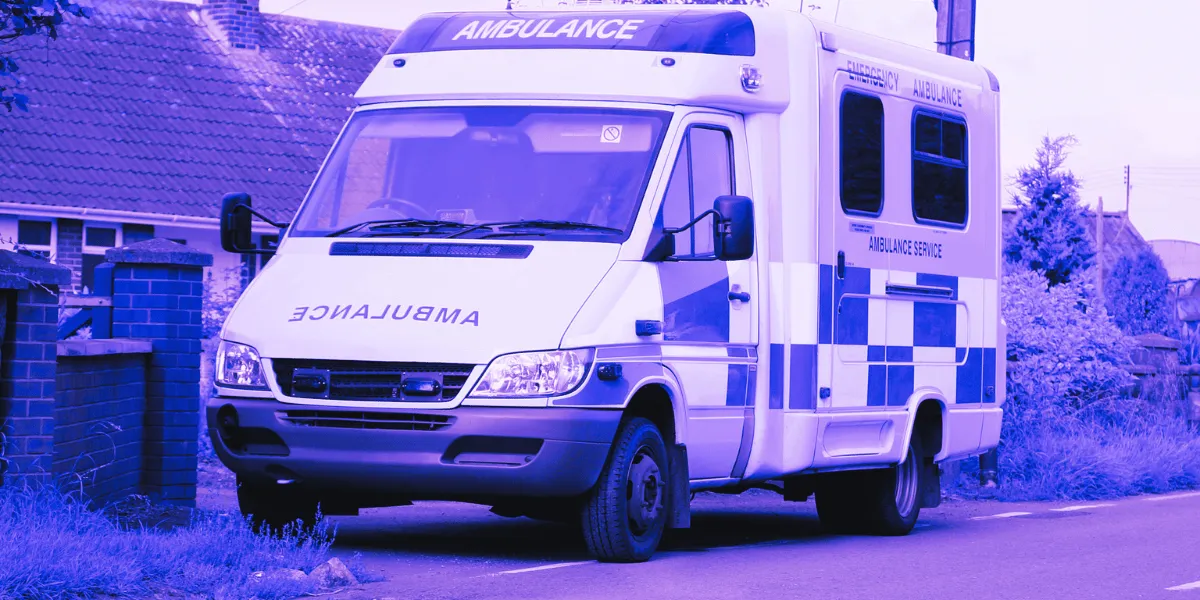
A private ambulance in the UK moves patients who need medical support but not a 999 emergency response. Independent companies run these vehicles, and families, care homes, hospitals and even the NHS book them directly. They cover planned transfers, hospital discharges, outpatient appointments and journeys to and from care homes.
Demand for private ambulance UK services has grown as the NHS tightens who qualifies for funded transport. Many people now search for an ambulance taxi, a bookable and assisted journey that sits between a normal taxi and an emergency ambulance. This guide explains how these services work, what they cost and how they are regulated.
Key takeaways
- Private ambulances are run by independent, CQC registered companies for planned, non-emergency journeys, not 999 emergencies.
- An ambulance taxi is a bookable, door to door service with trained staff and adapted vehicles for patients who cannot use a normal taxi.
- NHS patient transport is reserved for genuine medical need, so many people arrange private transport instead.
- Costs depend on distance, vehicle type and clinical staffing, so providers quote per journey rather than using a fixed price.
- Good providers show CQC registration, trained crews and clear clinical governance.
What is a private ambulance in the UK?
A private ambulance is a medical transport vehicle run by an independent company rather than the NHS. Most journeys are non-emergency, such as moving a patient between hospitals, home from a ward, or to a clinic appointment. Crews are trained ambulance staff, and vehicles carry equipment suited to each patient's needs.
- Planned hospital transfers and discharges
- Non-emergency journeys to appointments and clinics
- Care home and nursing home transport
- Event medical cover and standby
- Repatriation over long distances, in the UK and from abroad
The independent sector mainly provides patient transport and non-emergency work, though a growing number of providers also support NHS trusts with 999 responses at busy times, according to the Care Quality Commission.
How is a private ambulance different from an NHS ambulance?
The simplest difference is how you access each one. You reach an NHS emergency ambulance by calling 999, and it is publicly funded and focused on urgent care. A private ambulance is booked directly with a company, paid for by the user, and used for planned or non-emergency journeys.
- NHS ambulance: reached via 999, publicly funded, emergency response.
- Private ambulance: booked directly, paid privately, planned and non-emergency journeys.
- Both: qualified crews, equipped vehicles and clinical standards to meet.
Private providers support the NHS rather than replace it. They add capacity for planned work and step in when NHS services are stretched.
What is an ambulance taxi and who uses it?
An ambulance taxi is a bookable, non-emergency service that takes patients door to door with trained staff on board. Unlike a standard taxi, the vehicle is often wheelchair accessible and purpose built, with secure locking, low ramps and room for a carer. It suits people who cannot travel safely by public transport.
- Patients attending outpatient or dialysis appointments
- People leaving hospital who cannot use a car or taxi
- Care home residents needing supported journeys
- Families arranging transport for an older or disabled relative
Many of these passengers do not qualify for free NHS transport, which is where an ambulance taxi or private ambulance fills the gap.
Who is eligible for NHS patient transport?
NHS non-emergency patient transport is not open to everyone. Under national eligibility criteria published by NHS England in 2022, the principle is that most people should travel to hospital independently, by private or public transport or with help from family and friends. Funded transport is reserved for genuine medical need.
You are more likely to qualify if your condition or mobility means you could not travel safely by other means, or if travelling another way would harm your recovery. Local NHS Integrated Care Boards apply the national framework, so the exact assessment can vary between areas.
If you do not meet the criteria, the NHS expects you to arrange your own journey. A private ambulance or ambulance taxi is a common choice when a normal taxi is not suitable.
Are private ambulance services regulated in the UK?
Yes. In England, independent ambulance providers must register with the Care Quality Commission to carry out regulated activities, and the CQC inspects and rates them. This holds private services to recognised standards for safety, staffing and clinical governance, under the same watchdog that oversees NHS care.
The CQC has warned that quality across the sector varies, and that some activities can fall outside its remit. That makes it worth checking a provider's registration and latest rating before you book, rather than assuming every company meets the same standard.
- Current CQC registration and inspection rating
- Qualified crews such as paramedics, technicians or care assistants
- Vehicles equipped and maintained to clinical standards
- Clear, written quotes with no hidden fees
- Insurance and safeguarding checks on staff
How much does a private ambulance cost in the UK?
There is no fixed national price for a private ambulance. Providers quote per journey, because costs depend on several factors. A short local transfer with basic support costs far less than a long distance journey that needs a paramedic, specialist equipment or an overnight crew.
- Distance and journey time, often a base fee plus a rate per mile
- Vehicle type, from a wheelchair accessible car to a fully equipped ambulance
- Clinical staffing, as a paramedic or nurse adds to the cost
- Timing, with premiums for weekends, nights and short notice
- Waiting time, multiple stops and any specialist needs
Always ask for a written quote that lists every charge, so you can compare providers fairly.
How do operators run private ambulance and patient transport efficiently?
Running non-emergency transport well means matching the right vehicle and crew to each booking, then keeping journeys on time. Operators handle enquiries, eligibility checks, scheduling, dispatch and reporting, often across many trips a day. Manual systems and spreadsheets struggle at this scale, which leads to missed journeys and wasted capacity.
Purpose built transport software brings this together. Road XS gives providers online booking, live dispatch, vehicle allocation and real time tracking in one place, so hospitals, care homes and coordinators always know where a journey stands. That helps private ambulance and patient transport teams cut missed trips and use their fleet better.
- Transport managers and operations leads planning daily runs
- NHS and public sector buyers needing reliable, auditable services
- Local councils and charities coordinating community journeys
- Care homes and families booking supported, door to door travel
Frequently asked questions
Can anyone book a private ambulance in the UK?
Yes. Individuals, families, care homes, hospitals and insurers can book directly, and you do not need an NHS referral. The provider will ask about the patient's needs, the pick up and drop off points and the timing before confirming a quote.
Is a private ambulance the same as an ambulance taxi?
They overlap. An ambulance taxi usually means a bookable, wheelchair accessible and assisted journey for stable patients. A private ambulance can also cover higher need transfers with clinical staff and full medical equipment on board.
Does the NHS ever use private ambulances?
Yes. NHS trusts contract independent providers to add capacity for patient transport and, at busy times, to help with 999 responses, according to the Care Quality Commission.
Do private ambulances carry medical staff?
Most do. Depending on the patient's needs, crews include ambulance care assistants, emergency medical technicians, paramedics or nurses, with equipment matched to the journey.
How do I know a private ambulance provider is safe?
Check that it is registered with the CQC, look at its latest rating, and confirm staff qualifications, insurance and clear pricing before you book.
Why might I not qualify for NHS patient transport?
NHS transport is reserved for genuine medical need. If you can travel by car, public transport or a normal taxi, you are expected to arrange that yourself.
How far can a private ambulance travel?
There is no set limit. Providers handle local trips, long distance transfers across the UK and repatriation from abroad, quoted by distance and need.