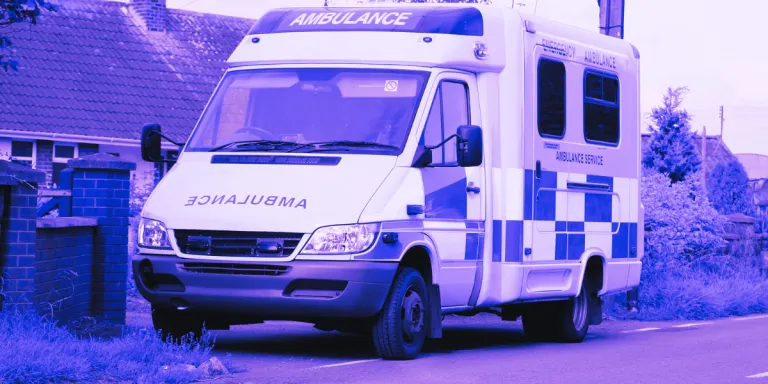






Ambulance transport covers every journey that moves a patient by road or air for a medical reason, from a life threatening 999 emergency through to a planned trip to an outpatient clinic.
In the UK it splits into two very different services, each with its own rules, vehicles and crews. This article explains how both work, who is eligible, who runs them and what the jobs involve.
Key takeaways
- Ambulance transport in the UK divides into emergency response through 999 and planned non emergency patient transport, known as NEPTS.
- Emergency 999 calls in England are triaged into four categories, each with a national response time standard, so the most serious cases get the fastest response.
- NEPTS is for patients whose medical or mobility need makes other travel unsafe or harmful, not for cost or convenience. Eligibility criteria tightened nationally from 1 April 2025.
- Emergency transport is run by regional NHS ambulance trusts. Non emergency transport is commissioned by Integrated Care Boards and delivered by ambulance trusts, private operators and community transport schemes.
- People searching for patient transport driver jobs or hospital transporter jobs are usually looking at ambulance care assistant, PTS driver or hospital porter roles, advertised through NHS Jobs, trusts and independent operators.
- Software that plans routes, allocates drivers and tracks vehicles live is now central to running non emergency patient transport at scale.
What is ambulance transport?
Ambulance transport is the movement of a patient in a suitably equipped vehicle for a medical reason. It ranges from an emergency response to a 999 call through to planned, non urgent journeys to and from healthcare appointments. The vehicle, the crew and the speed of response all depend on the patient's clinical need rather than convenience.
The term stretches wider than the blue light ambulance most people picture. It takes in emergency road ambulances staffed by paramedics, air ambulances for remote or time critical cases, and the quieter fleet of patient transport vehicles that carry people to dialysis, chemotherapy, outpatient clinics and hospital discharges every day.
What is the difference between emergency and non emergency ambulance transport?
Emergency ambulance transport responds to sudden, serious or life threatening problems through 999, using clinically trained crews and blue light travel. Non emergency patient transport, known as NEPTS, is planned transport for people whose medical condition means they cannot safely reach an appointment by any other means. The two run on entirely separate rules and resources.
| Feature | Emergency ambulance | Non emergency patient transport (NEPTS) |
|---|---|---|
| Access | 999 call, triaged by urgency | Booked in advance after eligibility assessment |
| Urgency | Immediate, often life threatening | Planned and non urgent |
| Crew | Paramedics and technicians | Ambulance care assistants or trained drivers |
| Typical journey | Scene to A&E | Home to clinic, dialysis, discharge home |
| Who runs it | NHS ambulance trusts | Trusts, private operators, community transport |
How do NHS ambulance response categories work?
When you call 999 in England, a trained call handler triages the emergency into one of four categories based on clinical urgency. Each category carries a national response time standard, so the sickest patients receive the fastest response. These categories have applied across England since the Ambulance Response Programme was introduced in 2018.
- Category 1 is for life threatening conditions such as cardiac arrest. The target is a 7 minute average response, with 90% of calls reached within 15 minutes.
- Category 2 covers emergencies such as stroke, chest pain and severe burns. The standard is an 18 minute average, temporarily set at 30 minutes across 2025 to 2026, with 90% reached within 40 minutes.
- Category 3 is for urgent but not immediately serious problems. Ambulance trusts aim to reach 90% of these within 120 minutes.
- Category 4 is the least urgent group, where 90% of cases should be reached within 180 minutes, and some are handled by phone advice instead.
Health is a devolved matter, so these figures apply to England. Scotland, Wales and Northern Ireland set their own ambulance standards. You can read more about the framework on the NHS England website.
Who is eligible for non emergency patient transport?
Eligibility for NHS funded non emergency patient transport rests on medical or mobility need, not on cost or convenience. A patient usually qualifies when their condition means travelling by car, taxi or public transport would be unsafe, or would harm their recovery. Integrated Care Boards commission the service and set local guidance within a national framework.
The national eligibility criteria were published by NHS England in May 2022, and a further national change from 1 April 2025 tightened them to protect capacity for those who genuinely cannot travel independently. The criteria exclude GP and primary care appointments, and NEPTS is never awarded for social or financial reasons alone.
Patients who have a financial rather than a medical need may instead claim help through the Healthcare Travel Costs Scheme. Where someone falls outside NEPTS but still cannot easily get to hospital, community transport often fills the gap with accessible, door to door journeys. You can review the current rules on the NHS England eligibility criteria page.
Who provides ambulance transport in the UK?
Emergency ambulance transport is delivered by regional NHS ambulance trusts, which run the 999 fleet and control rooms. Non emergency patient transport is commissioned by Integrated Care Boards and delivered by a mix of ambulance trusts, independent healthcare transport operators and community transport schemes. The right provider depends on the patient's needs and the local contract.
Community transport plays a growing part in this picture. As NEPTS capacity is protected for the most clinically dependent patients, non specialist journeys increasingly pass to volunteer car schemes, dial a ride services and demand responsive minibuses. Every routine appointment they cover frees an ambulance and crew for the emergency work only they can do.
What jobs exist in ambulance and patient transport?
Ambulance and patient transport is run by a wide workforce, from clinical crews to drivers and coordinators. People searching for patient transport driver jobs are usually looking at ambulance care assistant or PTS driver roles, which involve driving non emergency vehicles, supporting patients on board and helping with wheelchairs, stretchers and mobility aids.
Searches for hospital transporter jobs in the UK most often map onto the hospital porter role, which moves patients safely within a hospital between wards, theatres and imaging. Alongside these sit the clinical emergency roles of paramedic and ambulance technician, and the volunteer drivers who keep community car schemes running.
Most patient transport driver roles ask for a full driving licence, sometimes a D1 category for larger vehicles, an enhanced DBS check and provider training in patient care and manual handling. These jobs are advertised through NHS Jobs, individual ambulance trusts, private NEPTS operators and local community transport organisations, rather than through software providers like Road XS.
How does technology support ambulance and patient transport?
Modern patient transport runs on software that plans routes, allocates drivers, tracks vehicles live and manages bookings in one place. Good systems cut missed appointments, reduce empty mileage and give control rooms real time visibility of every journey. This matters most for non emergency services juggling hundreds of planned trips a day across a wide area.
Road XS brings these tools together in one cloud based platform, with demand responsive routing, live GPS tracking and What3Words location accuracy so crews, hospitals and passengers always know where a vehicle is. For operators running patient transport, the right system is the difference between a service that copes and one that quietly falls behind.
Frequently asked questions
Is ambulance transport free in the UK?
Emergency ambulance transport through 999 is free at the point of use. Non emergency patient transport is also free for patients who meet the medical eligibility criteria. Those who do not qualify but still have a financial need may be able to claim help through the Healthcare Travel Costs Scheme.
How do I book non emergency patient transport?
You book non emergency patient transport through your NHS trust or the local NEPTS provider's booking line, subject to an eligibility assessment over the phone. A friend, relative or carer can call on your behalf. Your booking usually includes the return journey home from your appointment.
What is the difference between NEPTS and an ambulance?
NEPTS is planned, non urgent transport for patients who cannot safely travel to an appointment by other means. A 999 ambulance is an emergency service with a clinical crew and blue light travel for sudden, serious or life threatening problems. The two use separate vehicles, staff and booking routes.
Who qualifies for patient transport to hospital?
You are likely to qualify when a medical or mobility need makes travelling by car, taxi or public transport unsafe or harmful to your recovery. Patient transport is not awarded for convenience or cost alone. Integrated Care Boards apply the national eligibility criteria, which were tightened from 1 April 2025.
What qualifications do you need to be a patient transport driver?
Most roles ask for a full driving licence, sometimes a D1 category for larger vehicles, an enhanced DBS check and employer training in patient care and manual handling. Exact requirements vary by ambulance trust or private operator, and many roles welcome applicants from a caring or customer service background.
Can community transport be used for hospital appointments?
Yes. Community transport often carries patients to hospital and clinic appointments, especially for non specialist journeys where someone is not eligible for NEPTS, or where a local scheme is commissioned as an alternative. These accessible, door to door services help ease pressure on ambulance and NEPTS capacity.
What are ambulance response time targets in England?
Category 1 calls target a 7 minute average response. Category 2 targets an 18 minute average, temporarily set at 30 minutes across 2025 to 2026. Ambulance trusts aim to reach 90% of Category 3 calls within 120 minutes and 90% of Category 4 calls within 180 minutes.