



Smart mobility solutions use live data, connected software and flexible services to move people more easily. They include demand responsive transport, joined up ticketing, real time information and shared vehicles. The aim is simple. Every journey should be easier to book, cheaper to run and open to everyone, including people who cannot use a bus.
In 2026, smart mobility is no longer a city experiment. It now sits in national strategy, new bus law and council budgets. This article explains what it is and what is working in the UK. It also shows what it means for councils, charities, NHS teams, schools, drivers, volunteers, passengers and families.
Key Takeaways
- Smart mobility uses live data and flexible services so transport fits real demand, not fixed timetables.
- The most useful smart mobility solutions for UK communities are demand responsive transport, simple booking, smart routing and clear reporting.
- Better Connected (April 2026) and the Bus Services Act 2025 push councils towards joined up transport designed around local need.
- Government funded rural pilots show that software, contracts and data decide whether a scheme lasts, not funding alone.
- Smart mobility only works if it stays inclusive, with phone booking kept open and carers, drivers and volunteers kept informed.
What is smart mobility?
Smart mobility is a way of running transport that uses technology to match vehicles to real need. Instead of fixed routes and paper diaries, it uses bookings, maps and live data to plan each day. The result is fewer empty seats, fewer missed pickups and more people reached with the same fleet.
It rests on three simple ideas:
- Connected: vehicles, drivers, passengers and office staff share the same live information.
- Data led: decisions come from real journeys, not guesswork.
- Flexible: services respond to demand instead of running empty to a timetable.
Smart mobility is not only about driverless cars or city apps. For most UK transport teams, it starts with a better booking system.
What are the main smart mobility solutions?
Smart mobility solutions are the tools and services that turn the idea into everyday travel. Some are built for busy cities. Others work best in villages, market towns and places the bus network has left behind. The table below shows the main types, what each one does and who gains most from it.
| Solution | What it does | Who benefits most |
|---|---|---|
| Demand responsive transport (DRT) | Books shared trips on request with no fixed route | Rural areas, councils, older and disabled passengers |
| Smart booking and dispatch | Matches each trip to the right vehicle and driver | Dial-a-Ride, car schemes, patient and school transport |
| Route optimisation | Groups trips and cuts empty miles | Transport managers, budget holders, drivers |
| Real time tracking and alerts | Shows where the vehicle is and texts passengers | Passengers, carers, coordinators |
| Integrated ticketing and contactless | One way to pay across buses, trams and trains | Commuters, city and regional networks |
| Mobility as a Service (MaaS) | Plan, book and pay for several modes in one app | Confident app users in larger towns and cities |
| Connected and automated vehicles | Self driving taxi and bus style services in pilots | Future users, including people who cannot drive |
Demand responsive transport
Demand responsive transport replaces fixed routes with shared trips that people book when they need them. The software plans pickups and drop offs as bookings arrive. The Department for Transport's DRT guidance says councils should consider the role it can play in keeping socially necessary services running. See how DRT software works.
Smart booking and dispatch
Good booking software stores each passenger's needs once, such as a wheelchair space, an escort or a mobility note. It then finds the nearest suitable driver or vehicle in seconds. This is the core of smart Dial-a-Ride software and community car scheme software, where the right match matters more than speed.
Route optimisation
Route optimisation groups trips that can travel together and orders the stops sensibly. It cuts empty miles, fuel and driver hours. It also means more passengers can be offered a time that suits them. Our guide to route optimisation for community transport explains how operators cut costs and miles this way.
Real time information
Live tracking shows staff where every vehicle is. Text alerts tell passengers when their driver is close. For carers and families, this removes the worry of waiting at the window. For coordinators, it means fewer phone calls asking "where is the bus?" and quicker action when something goes wrong on the road.
Integrated ticketing and Mobility as a Service
Integrated ticketing lets people pay once across several services. Mobility as a Service goes further, bringing planning, booking and payment into a single app. Both work best in larger towns and cities with dense networks. They matter less in a village with no bus, where people simply need a way to book a trip.
Connected and automated vehicles
Self driving passenger services are moving into real trials. On 22 May 2026 the government opened applications for operators to run taxi and bus style self driving pilots across Great Britain. Local transport authorities must give consent for each service. Full rules under the Automated Vehicles Act are expected from the second half of 2027.
What is driving smart mobility in the UK in 2026?
Three big changes are pushing smart mobility forward in England. A new national transport strategy, a new bus law and a strong message from Parliament all point the same way. Councils are being handed more power, and they are expected to use data and technology to design transport around the people who need it.
The Better Connected strategy
The Department for Transport published Better Connected: a strategy for integrated transport on 2 April 2026. It aims for transport that is safe, reliable, affordable and accessible across England. It sets out three principles and eight priorities. Several of those priorities read like a smart mobility checklist:
- Simplify payments and information
- Make travel accessible and affordable
- Champion data and technology
- Empower local leaders
The Bus Services Act 2025
The Bus Services Act 2025 became law on 27 October 2025. It gives councils more control over local buses. It also asks them to list socially necessary services, the routes people rely on for shops, work, health and social life. Community services often fit this. Read our guide to the Bus Services Act 2025.
Parliament's view on rural transport
In August 2025 the Transport Committee's Buses connecting communities report said a normal bus may not suit the smallest, most remote places. It called for a policy framework for demand responsive and community transport. It also asked government to review funding across school, health and social care transport, so services can share capacity.
Does smart mobility work in rural areas?
Yes, but only when the model and the software fit the place. The Department for Transport tested this through its Rural Mobility Fund evaluation, which looked at 18 DRT pilots in rural and suburban England. Every pilot offered a booking app. Yet results varied widely, and several lessons stood out for councils.
- Vehicles drive journeys. More vehicles carried more passengers.
- Smaller zones ran more efficiently. Some councils split zones or cut stops mid trial.
- Contracts caused problems. Several councils were held back by what they had agreed with their technology supplier.
- Data was missing. Most providers did not record who was travelling.
A real example: Travel Derbyshire on Demand

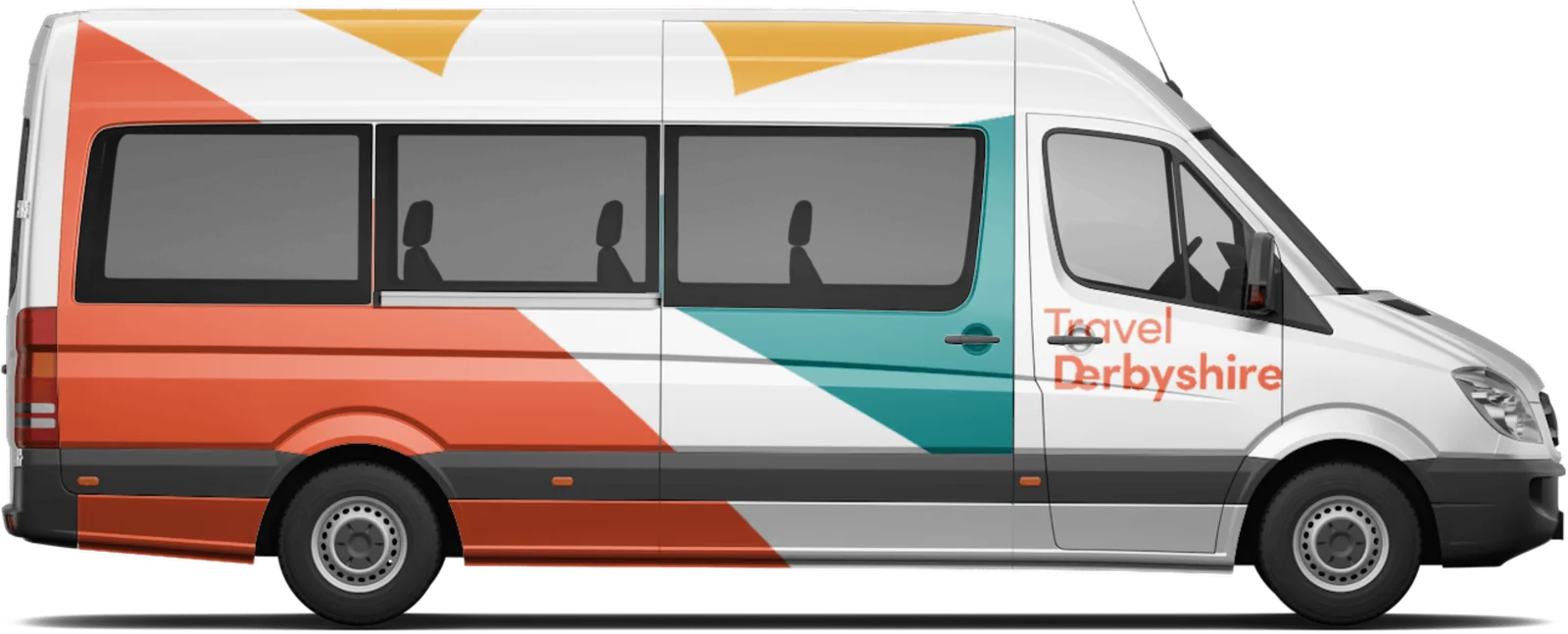
Travel Derbyshire on Demand was a government funded DRT service run on Road XS from February 2024. It had the most ground per vehicle of any comparable rural pilot in England. The full Derbyshire case study sets its record against all 18 national pilots. Here are the headline numbers:
- 14,148 passenger journeys over 764 operating days
- 2 vehicles covering about 230 square miles
- 12.3% of journeys carried a wheelchair and 28.1% used a concessionary pass
- App bookings grew from 54.6% in 2024 to 64.4% in 2026, with phone booking kept open
- A change of transport operator cost just one working day
The lesson is clear. In rural areas, the software matters as much as the vehicles.
What does smart mobility mean for your role?
Smart mobility looks different depending on where you sit. A councillor wants value and reach. A coordinator wants fewer phone calls. A driver wants a clear run sheet. A parent wants to know their child is safe. Below, we cover what matters most to each group and what good looks like in practice.
Councils, councillors and central government
- Evidence of who travels and why, to support socially necessary service lists
- Shared capacity across school, health, social care and community journeys
- Data and settings that stay with the council, not the supplier
- Clear reporting for budget holders and scrutiny panels
Our page on software for central and local government transport shows how one platform can run every service a council funds or delivers.
Charity CEOs, trustees and board members
For charity leaders, smart mobility is about proof and resilience. Funders and councils want numbers, not stories alone. Trustees need confidence that passenger data is safe and that the service will survive a key person leaving. Good software gives you reports on demand, a clear audit trail and less reliance on one person's spreadsheet.
Transport managers, coordinators and DRT operational leads
- Book, allocate and change trips in one place
- Set your own zones, booking windows and stop rules
- Book return journeys as one trip, with arrival times for appointments
- See unmet demand, not just completed journeys
SEND and home to school transport leads
Costs here are rising fast. The County Councils Network estimates councils spent £2bn on SEND school transport last year. It warns this could reach £3.4bn a year by 2030/31. Smarter routing, shared journeys where safe and accurate records of each pupil's needs all help. See our school transport software.
NHS transport leads and public sector buyers
For health journeys, arriving on time is the whole point. Smart scheduling can work backwards from an appointment time, allowing for other pickups on the way. It also records mobility needs, escorts and eligibility in one place. Buyers should ask for UK data hosting and clear reporting. Explore our patient transport software.
Facilities, operations, HR teams and sensitive transfers
Staff shuttles, site transport and sensitive transfers need tight control. That means knowing who travelled, with which driver, and when. It means safeguarding records kept in one secure place, not in emails. Our commercial and secure transport software supports shuttles and safeguarded transfers with a full audit trail.
Drivers and volunteers
Volunteers are under strain. The Community Transport Association's Mapping England research found 67% of operators did not have enough volunteers to meet demand. Smart tools help people stay. A simple driver app, clear runs, fewer late calls and fair allocation all make volunteering easier to give time to.
Passengers, carers and family members
- Book by app or by phone, whichever feels easier
- Get a text to confirm the trip and another when the driver is near
- Have mobility needs recorded once, not repeated every call
- Know that a real person is still there to help
What are the risks of smart mobility?
Smart mobility brings real benefits, but it can go wrong. Poorly planned technology can shut out the very people it should help, or tie a service to one supplier for years. These are the four risks that come up most often, along with a simple way to reduce each one before you commit.
Digital exclusion
Not everyone can use an app. Good Things Foundation's Digital Nation 2026 says only one in three UK adults are comfortably online. Many of those left out are older or disabled, and they rely most on community transport. Always keep phone booking, and let carers book on someone's behalf.
Data protection
Transport data often includes health needs, home addresses and travel patterns. UK GDPR still applies, as updated by the Data (Use and Access) Act 2025. Paper run sheets and group messages are a common weak spot. Our free guide on paper run sheets and data compliance explains the risks and fixes.
Supplier lock in
The rural pilots showed that contracts can trap a scheme. If the supplier controls your zones, stops and data, every change becomes a cost. Ask who owns the passenger records. Ask how quickly you could change operator. In Derbyshire, records stayed with the platform, so an operator change took one working day.
Funding cliffs
Many pilots end when the grant ends. The Transport Committee noted that no clear way has emerged to sustain these services once subsidy stops. The best defence is evidence. A scheme that can show who it carries, where they go and what demand it turns away has a far stronger case for continued funding.
How do you choose smart mobility software?
Start with your passengers, not the features list. Then test each supplier against the questions below. A good partner will answer every one clearly and show you real examples. If answers are vague, treat that as a warning sign. The right choice should fit your service today and grow with it.
- Can it run all your services, from DRT to car schemes, in one place?
- Can passengers book by app, web and phone?
- Does it record wheelchair space, escorts and mobility needs as standard?
- Can you change zones, stops and booking rules yourself?
- Does it optimise routes as bookings arrive?
- Will it report who travels, where they go and demand you could not meet?
- Is it built for UK law, UK data protection and UK public sector buying?
- Who owns the data if you change operator or supplier?
Worried about switching? Read about the hidden costs of legacy transport software and overcoming the fear of change.
How does Road XS deliver smart mobility?
Road XS is a cloud based transport platform built in the UK, out of community transport, and running since 2016. That history matters. Wheelchair space, escorts, mobility notes and concessionary status were never add ons. They were the starting point. Today it offers more than 850 features across every type of passenger transport.
- One platform for community transport, DRT, Dial-a-Ride, car schemes, group travel, patient, school and secure transport
- Continuous fleet optimisation that reworks each run as bookings arrive
- App, web and phone booking with text alerts and live pickup windows
- Operator controlled settings for zones, stops and booking windows
- Reporting as standard on wheelchair use, concessions, destinations and unmet demand
- Driver portal with GPS tracking on phone, tablet or desktop
You bring the vehicles and drivers. Road XS brings the technology, the data and a team that understands UK transport.
Frequently asked questions
What are smart mobility solutions?
Smart mobility solutions are tools and services that use live data and connected software to make transport easier to book, cheaper to run and open to more people. Examples include demand responsive transport, smart booking and dispatch, route optimisation, real time tracking, integrated ticketing and Mobility as a Service.
What is the difference between smart mobility and Mobility as a Service?
Smart mobility is the broad idea of using data and technology to improve transport. Mobility as a Service is one part of it. It brings planning, booking and payment for several types of transport into a single app, so a passenger can pay once for a trip that uses more than one service.
Is smart mobility only for big cities?
No. Some of the clearest gains are in rural areas. Demand responsive transport, smart booking and route optimisation help thinly served places keep a service where fixed bus routes struggle. In Derbyshire, two vehicles running on Road XS carried 14,148 passenger journeys across about 230 square miles.
How does smart mobility help older and disabled passengers?
It supports flexible travel from near the door, with needs such as a wheelchair space or an escort recorded once. Text alerts cut waiting time and missed appointments. Keeping phone booking open, and letting carers book for someone, means people who do not use apps are still fully included.
What UK policies affect smart mobility in 2026?
The main ones are the Better Connected strategy, published on 2 April 2026, and the Bus Services Act 2025. The Act asks councils to list socially necessary services. Data protection law, including UK GDPR and the Data (Use and Access) Act 2025, also shapes how passenger data is handled.
When will self driving buses carry passengers in the UK?
Applications for self driving taxi and bus style pilots opened on 22 May 2026, and the government said passengers could book journeys later that year. Local transport authorities must consent to each service. Full rules under the Automated Vehicles Act 2024 are expected from the second half of 2027.
How can a council or charity get started with smart mobility?
Start with your passengers and the journeys they cannot make today. Move bookings, drivers and vehicles onto one system so you have reliable data. Then add route optimisation, text alerts and app booking, while keeping phone booking open. Choose a supplier that lets you control your own settings and data.
Ready to make your transport smarter?
Whether you run a small car scheme, a council DRT service or NHS patient transport, Road XS can help you do more with the vehicles and people you already have. Tell us how your service runs today, and we will show you what smart mobility could look like for your passengers.