





The shift to electric vehicles is reshaping how organisations plan their transport operations. Whether you manage a community transport fleet, oversee council vehicles, run home-to-school routes, or simply want to understand the landscape before switching, knowing your electric car charging types is the foundation for making confident decisions.
This guide covers everything from connector types and EV charging speeds to public EV charging infrastructure, EV charging cards, and how to find chargers using an electric vehicle charging map.
Key Points
- Type 2 is the UK standard for home and public AC charging, used by virtually every new electric vehicle. CCS is the standard for rapid and ultra-rapid DC charging, while CHAdeMO is declining and mainly found on older models.
- EV charging speeds range from 3kW to 350kW or more, with slow and fast charging suited to overnight or destination use, and rapid and ultra-rapid options enabling 30-minute or faster top-ups for long-distance or high-frequency routes.
- The UK now has 119,080 public charge points as of April 2026, with 27,372 rated at rapid speed or faster, giving fleet operators and drivers a growing network to rely on beyond depot charging.
- An EV charging card offers a reliable, app-free way to access public charging across multiple networks, particularly valuable in areas with poor mobile signal or for fleet drivers managing different vehicles across varied routes.
- An electric vehicle charging map such as Zapmap is essential for route planning and driver confidence, with filters for charging speed, connector type, and live availability making it easy to find suitable chargers along any journey.
Understanding Electric Car Charging Types
The term "charging type" covers two distinct things: the connector your vehicle uses to physically connect to a charger, and the speed at which power is delivered. Getting both right is essential, whether you are charging at a depot overnight, topping up at a public car park, or pulling in at a service station between routes.
Type 2
Type 2, also known as Mennekes, is the standard connector for electric vehicles sold in the UK and across Europe. Zapmap confirms that virtually every new EV sold in the UK uses a Type 2 socket for AC charging, covering both home charging units and the majority of public AC charge points across the country.
Type 2 supports power delivery from 3.7kW up to 22kW, depending on the charger and the vehicle's onboard charging system. It is the connector found on most workplace chargers, public destination chargers, and home wallboxes, making it the one most fleet operators and daily drivers will use the majority of the time.
CCS (Combined Charging System)
CCS is the UK standard for rapid and ultra-rapid DC charging. It uses the same Type 2 base but adds two larger DC pins below, allowing far higher power delivery than AC charging. Zapmap confirms CCS as the standard for rapid DC charging across the UK and Europe, handling power levels from 25kW up to 400kW or more.
If you are on a long intercity run or need to top up quickly between transport routes, CCS is what you will reach for. Nearly all new electric cars sold in the UK now include a CCS port as standard, making it the go-to connector for high-speed public charging.
CHAdeMO
CHAdeMO was once a widely used rapid-charging connector, particularly associated with older Nissan Leaf models. While it supports rapid DC charging at comparable speeds to CCS, the UK network has shifted decisively toward CCS as the dominant DC standard in recent years.
New vehicles rarely include CHAdeMO, and the number of CHAdeMO charge points is gradually declining. If you manage an older fleet or advise passengers who drive early-generation EVs, it is worth checking connector compatibility before planning longer routes.
3-Pin and Type 1
A standard 3-pin plug can charge an electric vehicle at around 3.7kW but is the slowest option available and is generally only suitable for emergencies or when no other solution is accessible. Type 1 is an older five-pin connector found on early Japanese imports and first-generation electric models. Both are increasingly uncommon in modern fleet or transport operations.
EV Charging Speeds
Understanding EV charging speeds is just as important as knowing connector types. Speed determines how long a vehicle is off the road, which matters when you are planning driver schedules, managing fleet turnaround times, or calculating whether a vehicle can complete two back-to-back runs without a charging stop.
Slow Charging (3 to 7kW)
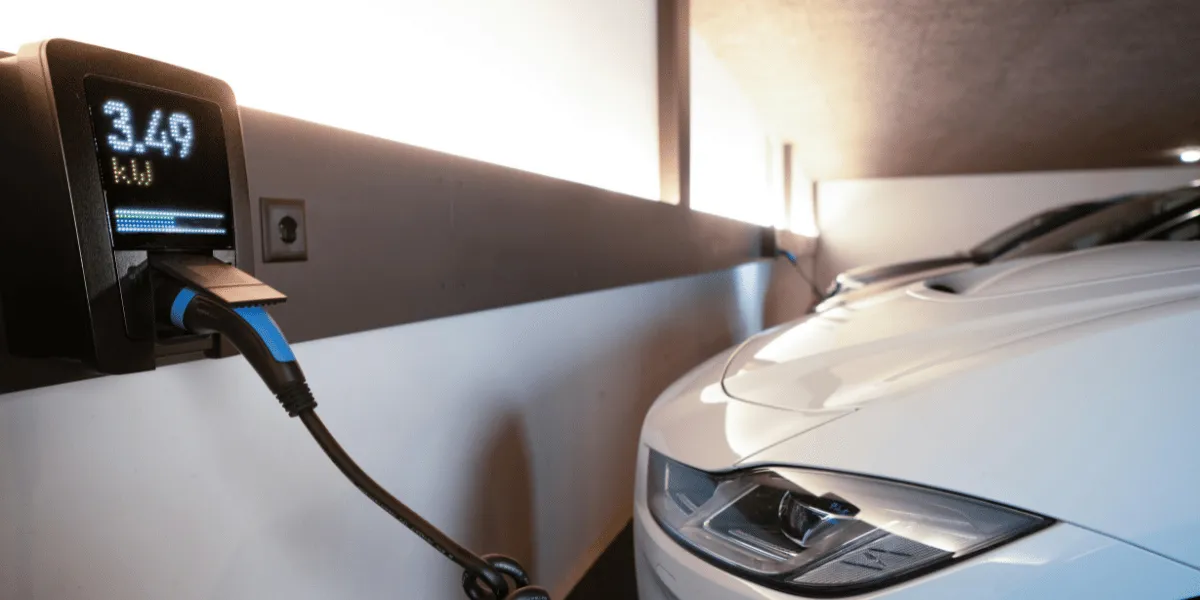
Slow charging is delivered via a 3-pin plug or a basic wallbox and provides between 3kW and 7kW. According to RAC Drive, a full charge at this rate can take 8 to 12 hours. This is typical for overnight home charging, where vehicles are plugged in at the end of a shift and ready for the following morning.
Fast Charging (7 to 22kW)
Fast charging covers the range from 7kW to 22kW, delivered via AC. A 7kW home wallbox or public destination charger is the most common example. At this speed, most EVs can reach a full charge in three to eight hours, making it well suited to workplace charging, social care vehicle bays, and overnight depot top-ups for community or DRT fleets.
Rapid Charging (50 to 150kW)
Rapid chargers deliver DC power from 50kW and are built for on-the-go sessions during longer journeys. RAC Drive notes that rapid chargers can bring most EVs from 10% to 80% charge in around 30 to 60 minutes. These are the chargers found at motorway service stations, petrol forecourts, and dedicated EV hubs along major routes.
Ultra-Rapid Charging (150kW and Above)
Ultra-rapid chargers deliver 150kW or more, with some capable of 350kW. At these speeds, compatible vehicles can move from 10% to 80% in as little as 15 to 30 minutes. Not every EV can accept ultra-rapid speeds, as the rate is capped by the vehicle's own maximum acceptance rate, but for those that can, it significantly cuts the time drivers spend off the road.
Public EV Charging in the UK
The public EV charging network in the UK has expanded substantially. Government statistics published in April 2026 show 119,080 public charge points now available across the country, with 27,372 of those rated as rapid or above at 50kW or faster. A further 3,028 chargers were added in the first quarter of 2026 alone.
Public EV charging locations break down across four broad categories based on the same government data. Fifty-two percent are destination chargers at car parks, retail sites, and similar venues. Thirty-two percent are on-street chargers. Eleven percent are en-route chargers at places like motorway services. The remaining four percent cover other site types.
For transport operators, local councils, NHS fleet managers, and SEND transport leads, this growth is meaningful. It means more options for drivers on longer routes, greater flexibility in scheduling, and growing confidence that the public infrastructure can support an electric fleet without relying entirely on depot or on-site charging.
Regional coverage varies considerably. Scotland leads at 228.5 chargers per 100,000 people, while Northern Ireland has the lowest density at 59.4 per 100,000, according to the April 2026 figures. Understanding these regional differences is important for any organisation planning fleet transitions or advising drivers operating in rural or less well-served areas.
Using an Electric Vehicle Charging Map
Finding the right charger at the right time is where an electric vehicle charging map becomes essential for day-to-day operations. Zapmap is the UK's leading EV charging map tool, covering public charge points across the country with live availability data, connector type filters, speed filters, and network details.
Drivers and fleet managers can set their vehicle model in the app, which automatically narrows results to compatible chargers. This removes guesswork when planning stops and avoids arriving at a charger that does not match the vehicle's connector or charging speed requirements.
For route planning in community transport, demand-responsive services, or home-to-school transport, building an electric vehicle charging map into operational planning can reduce unplanned stops and relieve range anxiety for drivers and coordinators. Other tools including Electroverse's map and individual apps from bp pulse, Pod Point, and Osprey also offer similar search and filter functionality.
EV Charging Cards
An EV charging card is a small, RFID-enabled card that allows drivers to start and stop a public charging session by tapping it on the charge point reader. There is no app to open, no account sign-in required at the charger, and no contactless payment at the point of use. Billing is handled automatically through the linked account.
Electroverse notes that their card provides access to over 1.3 million chargers across 950 or more networks in the UK and Europe. For fleet operators whose drivers need to charge across multiple networks, this kind of consolidated access is far simpler than managing separate app accounts for each provider.
The key practical advantage of an EV charging card over app-based systems is reliability in low-signal environments. RFID cards work without any mobile connection, making them more dependable in rural areas, underground car parks, or any location where signal is poor. For drivers covering less-served routes, this removes a genuine operational risk.
Some providers support roaming across multiple networks from a single card, cutting down the number of accounts and apps a driver needs. Electroverse's first card is free with no monthly subscription required, while other providers typically charge between £3 and £7 per month for access.
What This Means for Fleet and Transport Operators
For organisations moving toward electric vehicles, understanding the full range of electric car charging types is not just useful background knowledge. It is a practical requirement for planning depot infrastructure, writing vehicle procurement specifications, briefing drivers and volunteers, and building realistic route assumptions.
Community transport scheme coordinators, council fleet teams, NHS transport leads, SEND transport managers, and HR teams overseeing driver welfare all benefit from thinking through connector compatibility, required charging speeds, and access to public charging before committing to new vehicles or service contracts. Getting this right at the planning stage avoids costly adjustments and operational disruption later.