


Transport shapes almost every part of daily life, yet most of us know very little about how it got here. This guide brings together 100 transport facts covering cars, buses, community transport and demand responsive transport. Some are quirky, some are useful, and all of them are checked against current sources.
Key Takeaways
- Britain invented a surprising amount of the road. Traffic lights, cat's eyes, Belisha beacons and the zebra crossing all started here.
- The first speeding ticket was issued in 1896. Walter Arnold was caught doing 8mph in a 2mph zone and chased down by a policeman on a bicycle.
- Buses began as a happy accident. A French bathhouse owner started the world's first bus service in Nantes in 1826 without meaning to.
- Community transport is older than most people think. It traces back to Birmingham in 1960 and an ex-Army Land Rover.
- The numbers today are big. Britain runs around 4 billion local bus journeys a year, and England holds 8.9 million concessionary travel passes.
From the wheel to the self driving minibus, transport has driven trade, work, health and friendship for thousands of years. It has also produced some very odd stories along the way. Below you will find fun transport facts, transport history facts and interesting transport trivia, grouped so you can jump straight to what interests you.
You can also listen to our podcast episode on this topic.
What are the most interesting transport facts?
If you only want the headlines, start here. These ten transportation facts cover the biggest firsts, the oddest records and the numbers that matter most to anyone running transport in the UK today.
- The world's first traffic lights stood outside the Houses of Parliament in 1868. They ran on gas and exploded weeks later.
- The world's first speeding ticket went to Walter Arnold in Kent in 1896, for driving at 8mph.
- Cat's eyes were invented in Halifax by Percy Shaw and patented in 1934.
- The M6 Toll was surfaced using around 2.5 million pulped Mills & Boon novels.
- The world's shortest scheduled flight runs between two Orkney islands and can take under a minute.
- The word "bus" is short for "omnibus", meaning "for all" in Latin.
- The first electric bus ran in Berlin in 1882, powered by overhead wires.
- Community transport in the UK began in Birmingham in 1960 with a single ex-Army Land Rover.
- Demand responsive transport started in the United States in the 1970s, long before smartphones.
- England now holds 8.9 million older and disabled concessionary travel passes.

What are the best fun transport facts about cars?
The car is the most used form of transport in Britain. It is also the one with the strangest back story, from white tyres to a blind inventor who changed long journeys forever.
1) The first car appeared in 1886
Fact: Karl Benz patented his three wheeled Motorwagen in January 1886.
It was the first vehicle built from the ground up to run on an internal combustion engine. His wife, Bertha Benz, then drove it more than 60 miles in 1888 and proved the idea worked. The National Motor Museum credits Benz with the first successful petrol engined car.
2) The wheel is around 5,500 years old
Fact: Wheeled vehicles date back to roughly 3500 BC.
Archaeologists generally date the first wheeled vehicles to Mesopotamia around this period, though the potter's wheel came first. Almost every form of transport we use today rests on the invention.
3) Tyres used to be white
Fact: The first car tyres were white, not black.
Natural rubber is a pale milky colour, so early tyres looked almost white. Manufacturers later added carbon black to strengthen the rubber and resist sunlight, and tyres have been black ever since.
4) Electric cars are Victorian
Fact: Electric cars were built in the 1800s.
Inventors including Robert Anderson and Thomas Davenport built early electric vehicles decades before petrol took over. Electric transport is a comeback rather than a new idea, a point the US Department of Energy makes in its own history of the electric car.
5) The Model T changed manufacturing
Fact: The Ford Model T arrived in 1908 and moved to assembly line production in 1913.
Henry Ford's moving line cut build time dramatically and pushed prices down. Car ownership stopped being a luxury and became normal, a shift Ford still describes as the moment it put the world on wheels.
6) You could drive to the moon in under a month
Fact: At a steady 60mph, the moon is roughly 166 days away by road.
The moon sits about 239,000 miles from Earth. Drive non stop at motorway speed and you would still be going five months later, which puts your commute in perspective.
7) A woman invented the windscreen wiper
Fact: Mary Anderson patented the windscreen wiper in 1903.
She watched streetcar drivers leaning out into the sleet to clear their glass, then designed a lever operated blade. The National Inventors Hall of Fame records her US Patent No. 743,801, granted on 10 November 1903. It is now a standard safety feature on every vehicle.
8) A blind man invented cruise control
Fact: Ralph Teetor, who was blind from childhood, developed modern cruise control in the 1940s.
Teetor lost his sight in a childhood accident and went on to become a mechanical engineer. Frustrated by a passenger's uneven driving, he built a device to hold a steady speed, and it remains one of the clearest examples of a disability driving an innovation everyone now uses.
9) Volvo gave away the seat belt patent
Fact: Volvo engineer Nils Bohlin designed the three point seat belt in 1959, and Volvo opened the patent to everyone.
Volvo Group confirms the patent was given away free to the world, and credits the design with saving at least a million lives. The company decided the safety gain mattered more than the licence income.
10) Airbags took 30 years to catch on
Fact: Airbag patents were filed in the 1950s but the technology only became common in the 1980s and 1990s.
American John Hetrick and German engineer Walter Linderer both filed airbag patents in 1951. Early versions were unreliable and unpopular with drivers, and it took three decades of development before they became standard fit.
11) The car radio created Motorola
Fact: The first commercially successful car radio arrived around 1930.
The Galvin brothers fitted a radio into a car and named the product Motorola, blending "motor" with "Victrola". The company took the product name as its own and changed the journey experience forever.
12) The Prius was the first mass produced hybrid
Fact: The Toyota Prius launched in Japan in 1997.
It paired a petrol engine with an electric motor and made fuel efficiency a selling point. Toyota sold it in Japan first, and every hybrid on the road today owes it something.
13) Self driving cars were imagined in 1939
Fact: General Motors showed a driverless future at the 1939 New York World's Fair.
Norman Bel Geddes designed the Futurama exhibit, imagining cars guided by signals built into the road. Working prototypes arrived decades later, with Carnegie Mellon's Navlab project running camera and computer guided vehicles from the mid 1980s.
14) The longest traffic jam lasted 12 days
Fact: A jam on the Beijing to Tibet expressway in 2010 stretched more than 60 miles and lasted around 12 days.
Roadworks met a surge in coal lorry traffic and the road simply stopped moving. As BBC News reported at the time, drivers ate and slept in their vehicles while roadside traders sold them noodles.
15) The fastest production car passed 300mph
Fact: A Bugatti Chiron Super Sport 300+ recorded 304.77mph in 2019.
Bugatti records the exact figure as 304.773mph, set by Andy Wallace at the Ehra-Lessien test track in Germany. It was a one direction run in a pre-production car, so the outright title is disputed.
16) The most expensive car sold for £114 million
Fact: A 1955 Mercedes-Benz 300 SLR Uhlenhaut Coupé sold for 135 million euros in 2022, roughly £115 million.
Only two were ever built. Mercedes-Benz Group confirms the sale took place at its museum on 5 May 2022 through RM Sotheby's, with proceeds seeding a global scholarship fund.
17) The longest car is 100 feet long
Fact: The "American Dream" limousine measures just over 100 feet.
Built by Jay Ohrberg and recognised by Guinness World Records, it includes a swimming pool, a helipad and a diving board. It bends in the middle and needs a driver at each end.
What are the quirkiest transport facts from UK history?
Britain invented a surprising share of the modern road. These quirky transport facts cover traffic lights, cat's eyes, the zebra crossing and the Highway Code, and almost all of them arrived after something had gone badly wrong first.
If you want quirky transport facts UK readers rarely hear, start with the traffic light that exploded on a policeman. It only lasted three weeks.
18) The world's first traffic light exploded
Fact: The first traffic signals were installed outside the Houses of Parliament on 10 December 1868.
They used railway style semaphore arms by day and gas lamps by night. According to the National Motor Museum, the gas exploded on 2 January 1869 and injured the police constable operating them.
19) The first speeding ticket was for 8mph
Fact: Walter Arnold was caught doing 8mph in a 2mph zone at Paddock Wood, Kent, on 28 January 1896.
Guinness World Records confirms he was chased down by a police officer on a bicycle and charged on four counts. Arnold ran one of Britain's first car dealerships, so the run may well have been a publicity stunt.
20) Cars once needed a man with a red flag
Fact: Early UK law required a person to walk ahead of a motor vehicle waving a red flag.
The limit was 2mph and three people were needed to operate one car. Parliament scrapped the rule later in 1896 and raised the limit to 14mph, which motorists celebrated with the London to Brighton "Emancipation Run". Walter Arnold himself took part, according to Historic UK.
21) Cat's eyes were invented in Halifax
Fact: Percy Shaw patented the reflective road stud in 1934.
He realised he had been steering at night using polished tram rails, and looked for a replacement once they were pulled up. He founded Reflecting Roadstuds Limited in Halifax in 1935, and wartime blackouts turned the invention into a national fixture. Source: National Motor Museum.
22) Belisha beacons are named after a minister
Fact: The orange globes on crossings are named after Leslie Hore-Belisha, Minister of Transport in 1934.
He introduced them under the Road Traffic Act 1934 after a year in which 7,343 people were killed on British roads, half of them pedestrians (Historic England). Not everyone approved, and vandals shot out early glass globes with air guns.
23) The first zebra crossing was in Slough
Fact: The first official zebra crossing was installed in Slough on 31 October 1951.
The National Archives records that the Ministry of Transport trialled red and white stripes as well as black and white from 1949. Black and white won, and the glass globes were swapped for plastic in 1952 because children kept smashing them.
24) The first Highway Code cost one penny
Fact: The Highway Code was first published in 1931 and ran to 21 pages.
It cost one old penny and included hand signals for drivers of horse drawn vehicles, because tens of thousands were still on the road. Historic England notes there were 2.3 million motor vehicles in Britain at the time.
25) Driving tests only became compulsory in 1935
Fact: The driving test became compulsory in Britain on 1 June 1935.
It came in under the Road Traffic Act 1934, which also brought the 30mph limit in built up areas. Testing ran voluntarily from 16 March to avoid a rush, the fee was seven shillings and sixpence, and anyone already driving before April 1934 could carry on untested.
26) A motorway was built with romance novels
Fact: Around 2.5 million pulped Mills & Boon novels went into the surface of the M6 Toll.
As BBC News reported when the road opened in 2003, the pulp helps hold the asphalt together, absorbs water and dampens noise. Roughly 45,000 books were needed for every mile.
27) The world's shortest flight is in Scotland
Fact: The Westray to Papa Westray hop in Orkney covers 1.7 miles.
Loganair has flown the route since 4 December 1967 using an eight seat Britten-Norman Islander. It is scheduled at 90 seconds, the record is 53 seconds, and Guinness World Records notes the distance flown is shorter than either Heathrow runway.

What are the best transport facts about buses?
The bus is the workhorse of British public transport. It carries more passengers than any other mode outside the car, and its history is stranger than most people expect.
28) "Bus" is short for "omnibus"
Fact: The word comes from the Latin "omnibus", meaning "for all".
A hatter's shop in Nantes carried the sign "Omnes Omnibus", a play on the owner's name. Locals borrowed the word for the coach that stopped outside, and the shortened version stuck.
29) The first bus service started by accident
Fact: The world's first bus service began in Nantes, France, on 30 September 1826.
Stanislas Baudry ran a bathhouse and laid on a horse drawn shuttle to bring in customers. As Works in Progress tells it, he noticed people were riding it for the journey rather than the baths, so he started a bus company instead.
30) London's first bus ran in 1829
Fact: George Shillibeer launched London's first bus service on 4 July 1829.
The London Transport Museum records that Shillibeer built large coaches in Paris in the 1820s, then brought the idea home. His Paddington to Bank service carried up to 22 passengers for a shilling and needed no advance booking, which was the real breakthrough.
31) The first double deckers were horse drawn
Fact: Commercial double decker omnibuses appeared in England in 1847.
Adams & Co of Fairfield in Bow added an open upper deck reached by ladder rungs. Matt Brosnan, head curator at the London Transport Museum, credits the Great Exhibition of 1851 with pushing roof seating into the mainstream, first as "knifeboard" back to back benches and later as forward facing "garden seats".
32) London had 400 horse buses within three years
Fact: By 1832, just three years after Shillibeer started, 400 horse buses were running in London.
The London Transport Museum records the speed of that take up. Competition was fierce enough that Shillibeer himself was forced out of business by 1834.
33) London buses were not always red
Fact: Early 1900s London buses came in many colours.
Dozens of rival firms ran the routes and each used its own livery. The London General Omnibus Company, founded in 1855, painted its whole fleet red to stand out from competitors, and the colour outlived the competition.
34) The first motor bus was a Benz
Fact: The first motorised bus service began in Germany in 1895 using a Benz vehicle.
It carried eight passengers on a rural route in the Siegerland region. Horse power was on the way out for public transport from that point on.
35) The Routemaster arrived in 1954
Fact: London Transport developed the Routemaster in 1954.
It borrowed lightweight construction from wartime aircraft engineering. The London Transport Museum holds RM1, the first of four 1954 prototypes, and notes the type served until 2005 and was voted one of Britain's top ten design icons in 2006.
36) The first electric bus ran in 1882
Fact: The Electromote ran in Halensee, Berlin, from 29 April 1882.
It was built by Siemens & Halske, the firm Werner von Siemens founded in 1847, and was a converted landau carriage drawing 550V from overhead wires. The contact car running along those wires was called a "trolley", which is where trolleybus gets its name.
37) The longest bus route ran to Calcutta
Fact: A London to Calcutta bus service covered around 15,000km.
It ran from the 1950s until the 1970s, when political changes along the route closed it. Passengers slept on board and the journey crossed most of Europe and Asia.
38) Britain's longest bus route is 230 miles
Fact: The Scottish Citylink service from Uig on Skye to Glasgow runs about 230 miles.
The route passes Kyle of Lochalsh and Fort William on the way to Buchanan Bus Station, and Scottish Citylink timetables the full trip at close to eight hours.
39) Bendy buses carry huge loads
Fact: The largest articulated buses can carry well over 200 passengers.
A concertina joint lets a long vehicle turn tight corners. They are common on busy corridors in cities with high demand and limited road space, though London withdrew its bendy buses in 2011.
40) Hydrogen buses reached the public in 2005
Fact: Eight hydrogen fuel cell buses ran in service at Expo 2005 in Aichi, Japan.
Hino and Toyota began developing the FCHV-BUS in 2000, with road testing by Toei Bus from 2003. The buses emit only water vapour at the tailpipe.
41) Bus rapid transit began in Brazil
Fact: Curitiba opened the first bus rapid transit system in 1974.
Dedicated lanes and level boarding gave buses tram like speed at a fraction of the cost. The World Resources Institute credits Curitiba as the template that cities worldwide went on to copy.
42) The first school buses were horse drawn
Fact: Horse drawn "school hacks" carried children in the late 1800s and early 1900s.
They were little more than covered wagons with benches, and were known as school hacks or kid hacks. Modern school transport now involves safeguarding checks, tracking and accessible vehicles.
43) School buses are yellow for a reason
Fact: Yellow is easier to spot than red in poor light.
The eye picks up yellow faster with peripheral vision, especially in rain or fog. National School Bus Glossy Yellow was adopted as the US standard in 1939 and remains a legal requirement there.
44) Buses got Wi-Fi in the early 2000s
Fact: The first Wi-Fi equipped buses appeared in the early 2000s.
It started as a novelty on long coach routes. It is now expected on most new fleets, and it is one reason bus travel can compete with the car for commuters.
45) Buses are far safer than cars
Fact: Travelling by bus carries a small fraction of the risk of travelling by car.
Analysis by Todd Litman in the Journal of Public Transportation found US bus passengers suffer roughly one sixtieth the traffic fatalities per passenger mile of car occupants. Fewer cars on the road also means fewer collisions overall.
46) Jakarta runs a vast bus network
Fact: Jakarta operates one of the largest bus rapid transit networks on the planet.
TransJakarta covers hundreds of kilometres of corridors with thousands of vehicles. It is proof that buses can move a megacity without rail.
47) Driverless buses started trials in 2016
Fact: Switzerland began public trials of a fully automated bus in 2016.
Small autonomous shuttles ran on set routes in the town of Sion. Similar trials have since run in the UK, including longer road based routes in Scotland.
48) Half of England's bus journeys are in London
Fact: Transport for London accounts for roughly half of all local bus passenger journeys in England.
The Department for Transport notes TfL covers half of all local bus passenger journeys in England. That single figure explains a great deal about the debate over rural and small town services.
49) Concessionary travel is a big share of the bus market
Fact: Concessionary journeys made up 28% of all bus passenger journeys in England outside London in the year to March 2025.
In London the figure was 27%, according to DfT annual bus statistics. Older and disabled passengers are not a niche market, they are close to a third of it.

What are the most interesting community transport facts?
Community transport fills the gaps left by commercial routes. It matters to councils, charities, NHS teams and families, and it has a longer history than most people realise.
50) It began with one Land Rover
Fact: UK community transport services trace back to the early 1960s and one ex-Army Land Rover.
Father Bryan Scrivener, a clergyman and former army chaplain, used his Land Rover to help low income families move house and distribute donated furniture. Community Transport was registered as a charity in 1966 and went on to pioneer door to door services for disabled people.
51) Dial-a-Ride was designed by disabled people
Fact: The first London Dial-a-Ride scheme launched in Islington in 1980.
Transport for All records that disability groups across London proposed the model in the late 1970s, and that these were the first schemes run by disabled people for disabled people. Brent, Hammersmith and Fulham, Ealing and Camden followed in 1982.
52) Blended DRT started in Derbyshire
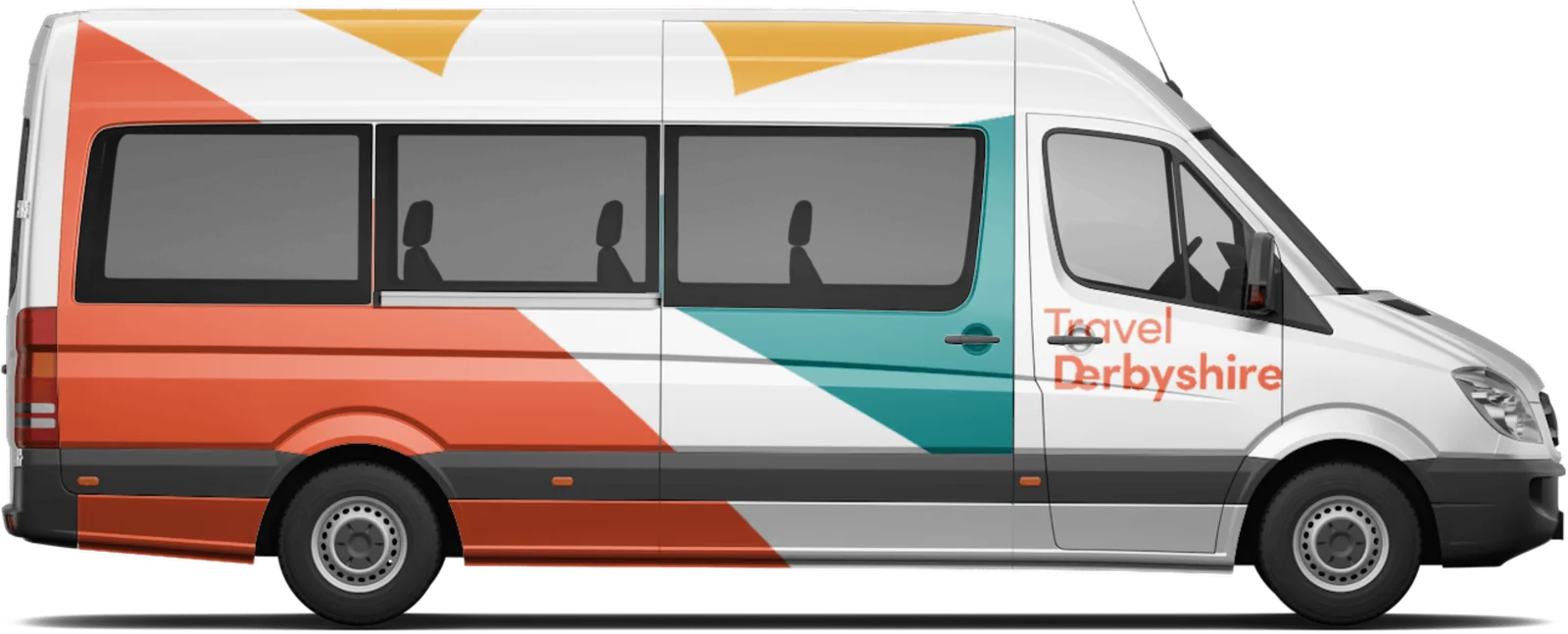
Fact: The first blended DRT service launched on 19 February 2024.
Travel Derbyshire on Demand carried general public passengers and community transport users on the same platform, as Road XS reported at launch. It showed the two models can share vehicles and drivers.
53) Community car clubs grew in the 1990s
Fact: Community car clubs took hold in the UK during the 1990s.
Members share access to a small pool of vehicles instead of owning one each. Research collected by CoMoUK, the national charity for shared transport, consistently finds each shared car replaces several privately owned ones.
54) Mobility as a Service bundles everything
Fact: MaaS brings different transport options into one booking and payment system.
A passenger books a whole journey rather than each leg. The International Transport Forum has argued it works best when community and commercial services share data openly.
55) Accessible taxis date from the 1980s
Fact: Wheelchair accessible taxis became widely available in the UK from the 1980s.
Ramps and higher roofs let passengers travel in their own chairs. Under the Equality Act 2010, drivers of designated wheelchair accessible vehicles must carry wheelchair users and cannot charge extra.
56) Community buses fill rural gaps
Fact: Most community bus services are run by charities and volunteers.
They cover villages that commercial operators cannot serve profitably. The Community Transport Association represents these operators across England, Scotland, Wales and Northern Ireland.
57) Transport is a social inclusion tool
Fact: Community transport is used directly to reduce loneliness and isolation.
Trips to lunch clubs and social groups matter as much as trips to hospital, a point the Community Transport Association makes repeatedly in its advocacy. For many passengers the journey itself is the social contact.
58) Ride hailing changed expectations
Fact: Uber launched publicly in 2010 after a beta test.
It reset what passengers expect from booking, tracking and payment. Community transport schemes now face the same expectations, which is why apps and live tracking matter.
59) Electric minibuses are spreading
Fact: A growing number of community transport schemes now run electric vehicles.
Short, predictable local routes suit electric range well. Charging infrastructure and capital funding remain the two big hurdles, as our guide to greener transport sets out.
60) Funding comes from many places
Fact: Most schemes combine grants, local government contracts, donations and fares.
No single income stream usually covers the cost, and the Community Transport Association regularly reports funding as the sector's biggest pressure. That mix is why community transport costs need careful reporting.
61) Bike sharing began in Amsterdam
Fact: The Witte Fietsen "white bikes" scheme launched in Amsterdam in 1965.
Bikes were painted white, left unlocked and free for anyone to use. The scheme collapsed within months as bikes were stolen or dumped in canals, but it started an idea now used worldwide.
62) Volunteers keep the sector running
Fact: Most community transport depends on volunteer drivers.
Without them the vehicles simply do not move. Recruitment and retention is consistently reported by the Community Transport Association as one of the sector's biggest operational risks.
63) Transport cooperatives are community owned
Fact: Some transport services are owned and governed by the people who use them.
Members set the routes and the priorities. Co-operatives UK supports this model across sectors, and it keeps decisions local and accountable.
64) Rural schemes innovate first
Fact: Rural operators often pilot new models before cities do.
Scarce funding and scattered demand force creative answers. Shared taxis, flexible routes and rural transport solutions frequently start in villages before cities adopt them.
65) The minibus is the workhorse
Fact: Minibuses are the most common community transport vehicle.
They are small enough for narrow lanes and large enough for a group. Tail lifts and removable seats make them flexible for wheelchair users, and most run under a section 19 or section 22 permit.
66) Some services mix the generations
Fact: A number of schemes deliberately pair older and younger passengers.
Shared trips build connections that neither group gets elsewhere. Organisations such as Generations Working Together support this kind of intergenerational practice across the UK.
67) Cities need community transport too
Fact: Demand for community transport stays high in well connected urban areas.
A frequent bus is no use if a passenger cannot reach the stop or board unaided. Door to door services solve the last 200 metres, which is where most journeys actually fail.
68) It becomes critical in emergencies
Fact: Community transport schemes supported vaccination and delivery programmes during the COVID-19 pandemic.
Vehicles and volunteer networks were already in place. The Community Transport Association documented members shifting to prescription deliveries, food runs and vaccination transport within weeks.
69) Paper is still the biggest bottleneck
Fact: Many schemes still plan journeys on paper run sheets.
Paper is slow, hard to audit and carries real UK GDPR risk, since a lost run sheet is a reportable personal data breach under ICO guidance. Online booking systems remove most of that exposure.
70) Outings matter as much as appointments
Fact: Group trips to shops, museums and events are a core part of many services.
These journeys are often the highlight of a passenger's month. They also spread vehicle use across quieter parts of the day, which improves the economics of the whole fleet.
71) It has a measurable health impact
Fact: Reliable transport reduces missed NHS appointments.
NHS England treats missed appointments as a significant source of lost capacity, and transport is a recognised cause. Getting people to the door on time is a clinical issue, not just a logistical one.
72) Models differ around the world
Fact: Community transport looks different in every country.
The United States runs paratransit under Americans with Disabilities Act rules. Japan uses community vans, while the UK relies heavily on the charity sector and section 19 and 22 permits.
73) The future is electric and automated
Fact: The future of community transport points towards electric fleets and automated scheduling.
Automation is arriving in the back office long before it arrives in the driver's seat. Better scheduling means more trips from the same vehicles, which is the cheapest capacity any scheme can buy.
74) It supports the local economy
Fact: Community transport keeps people spending, working and volunteering locally.
Passengers reach high streets, employers reach staff and colleges reach students. The return sits well beyond the transport budget line, as our guide to transport economics explains.
75) Awareness is the biggest barrier
Fact: Most people only discover community transport at the point they need it.
Referrals often come from a hospital discharge team or a worried relative. Steady promotion through GP surgeries, libraries and social prescribing links closes that gap.
76) It supports education access
Fact: Community and SEND transport keeps pupils in school where mainstream routes fail.
Home to school and SEND teams often rely on the same vehicles and drivers as community schemes. Attendance and attainment both depend on the vehicle turning up.
77) Older passenger schemes are growing
Fact: Services aimed specifically at older people are expanding as the population ages.
Giving up a car does not have to mean giving up independence. Age UK links transport access directly to isolation risk, and assisted travel keeps people in their own homes for longer.
78) Inclusive design is now standard practice
Fact: Vehicles and booking systems are increasingly designed around accessibility from the start.
That covers ramps, seating, hearing loops and readable screens. Under the Equality Act 2010 the duty to make reasonable adjustments is anticipatory, so retro fitting access is both harder and riskier than building it in.
79) It cuts carbon by sharing seats
Fact: One well filled minibus replaces several single occupancy car trips.
Shared trips lower emissions per passenger mile. Good scheduling is one of the cheapest carbon savings available to a local council, and it needs no new vehicles.
80) Partnerships hold it together
Fact: Most schemes work through partnerships between charities, local councils and NHS bodies.
Each partner brings something the others lack: funding, referrals, vehicles or volunteers. Longer contracts give schemes the confidence to invest in vehicles and staff.

What are the best facts about demand responsive transport?
Demand responsive transport is often described as the future of public transport. It is actually older than the smartphone by about 30 years.
81) DRT started in the 1970s
Fact: The first demand responsive transport schemes ran in the United States in the 1970s.
Rochester, New York, is usually cited as an early example. Minibuses offered door to door travel in areas too thin to support a fixed route, with bookings taken by telephone.
82) It transforms rural access
Fact: DRT is widely used to connect isolated rural communities in Scotland and Wales.
A timetabled bus cannot serve scattered homes economically. A flexible vehicle can, because the route forms around the bookings rather than the other way round.
83) The maths is the hard part
Fact: Modern DRT relies on scheduling algorithms rather than manual planning.
Software such as Road XS matches passengers, vehicles and time windows in real time. Doing that by hand for 200 daily bookings is close to impossible.
84) Helsinki ran an early experiment
Fact: Helsinki's Kutsuplus shared minibus service ran until 2015.
It matched passengers heading the same way and was popular with users, but Helsinki Regional Transport closed it at the end of 2015 because the subsidy per trip stayed too high. It shaped almost every scheme that followed.
85) It extends independence for older passengers
Fact: DRT is heavily used by older and disabled passengers.
Pick up at the door removes the walk to a stop, the kerb and the queue. That one change decides whether many people travel at all.
86) Cities use it too
Fact: DRT operates successfully in dense urban areas including London.
It works well where demand is spread thinly across time rather than across space. Evening and early morning shift patterns are the typical use case.
87) It gets children to school
Fact: Australia's School Student Transport Scheme uses flexible transport for remote pupils.
New South Wales covers vast distances with very few pupils per route. The same logic applies to UK home to school and SEND transport, where a fixed route rarely fits the cohort.
88) It feeds the main network
Fact: DRT often works best as a connection to trains and trunk bus routes.
Schemes such as Vienna's CityRide link passengers to major interchanges rather than competing with them. Feeding the network almost always beats trying to replace it.
89) It covers the hours buses do not
Fact: Berlin's BerlKönig ran an on demand night service.
Late night travel is where fixed routes are least viable and where passenger safety matters most. DRT can fill that window at a fraction of the cost of a timetabled service.
90) It has an emergency role
Fact: DRT fleets can be redirected for evacuation and supply runs.
The vehicles are already flexible and the scheduling software already knows where every driver is. Local resilience forums increasingly count these fleets as a civil contingency asset.
91) There are three main DRT models
Fact: DRT services are usually localised, rural or first and last mile.
- Localised: serves a small defined area and its local trips.
- Rural: connects scattered villages to essential services.
- First and last mile: links homes and workplaces to a transit hub.
92) One vehicle replaces many cars
Fact: A single DRT trip can replace several single occupancy car journeys.
That helps where demand is too low for a fixed bus but too high to ignore. Flexible shift patterns at hospitals and distribution centres are a common example.
93) You do not need an app to use it
Fact: Good DRT services take bookings by phone as well as by app.
Many passengers who need DRT most are least likely to own a smartphone. Under the Equality Act 2010 a staffed phone line is an accessibility requirement, not a legacy cost.
What do transport facts tell us about UK transport today?
History is entertaining, but current numbers are what shape budgets and contracts. These seven figures are the ones worth quoting in a board paper or a committee report.
94) England holds 8.9 million concessionary passes
Fact: There were 8.9 million older and disabled concessionary travel passes in England in the year to March 2025, up 1%.
That is roughly one pass for every six people in England, according to DfT concessionary travel statistics.
95) Concessionary travel cost £795 million
Fact: Travel Concession Authorities reimbursed bus operators £795 million in the year to March 2025, across 624 million journeys.
Journeys rose 4% and reimbursement rose 8% in constant prices (DfT concessionary travel statistics). That is a material line in every local council transport budget.
96) Britain makes around 4 billion bus journeys a year
Fact: Bus passengers made just over 4 billion journeys across Great Britain in the year to March 2025.
That works out at roughly 11 million every day, or about 60 journeys per adult per year, based on DfT annual bus statistics.
97) Congestion cost the UK £11 billion in 2025
Fact: UK drivers lost an average of 59 hours to congestion in 2025, worth £822 each and £11 billion nationally.
Delays actually fell in 48% of UK urban areas, bucking a global trend of rising congestion, according to the INRIX 2025 Global Traffic Scorecard.
98) London remains the most congested UK city
Fact: London drivers lost 91 hours to traffic in 2025, a 10% improvement on 2024.
The capital still accounts for close to half of all UK delay, worth around £5.2 billion in lost time (INRIX).
99) The mileage rate rose for the first time since 2011
Fact: The HMRC Approved Mileage Allowance Payment rose from 45p to 55p per mile from 6 April 2026.
The rate had been frozen since 2011. It covers the first 10,000 miles in a tax year, then 25p, with a further 5p per mile for each passenger carried, as set out on GOV.UK. Every volunteer driver scheme in the country is affected.
100) The network is enormous
Fact: Great Britain has 246,500 miles of publicly maintained road, of which just 2,300 miles are motorway.
DfT road length statistics put minor roads at 214,600 miles, or 87% of the network. Almost all of it is maintained by local councils, not central government. See our guide to transport infrastructure for how that funding works.
Transport facts FAQs
What is the most surprising transport fact?
For most people it is the M6 Toll. Around 2.5 million pulped Mills & Boon novels were mixed into its surface to help absorb water and reduce noise. Roughly 45,000 books went into every mile of road.
What was the first form of public transport?
The horse drawn omnibus. Stanislas Baudry started the first scheduled service in Nantes in 1826, almost by accident, after noticing passengers were using his bathhouse shuttle for other trips. George Shillibeer brought the idea to London in 1829.
When was the first speeding ticket issued?
On 28 January 1896. Walter Arnold was caught driving at 8mph through Paddock Wood in Kent, where the limit was 2mph. A police constable chased him for five miles on a bicycle and he was fined on four separate counts.
What is community transport?
Community transport is not for profit, accessible transport run for people who cannot easily use mainstream services. It covers Dial-a-Ride, community car schemes, group hire and volunteer driver schemes, and is usually run by charities working with local councils and NHS teams.
How old is demand responsive transport?
Around 50 years. The first demand responsive transport services ran in the United States in the 1970s using minibuses and telephone bookings. Apps and scheduling algorithms made the model far more efficient, but the core idea has not changed.
Are buses safer than cars?
Yes, by a wide margin. Research in the Journal of Public Transportation puts the risk of car and lorry travel many times higher than bus travel. Every full bus also removes cars from the road, which lowers collision risk for everyone else.
What is the current mileage rate for volunteer drivers?
55p per mile for the first 10,000 miles in a tax year, then 25p, with an extra 5p per mile for each passenger carried. The rate rose from 45p on 6 April 2026, the first change since 2011.
Why do these transport facts matter?
Behind the trivia sits a serious point. Almost every safety feature we take for granted, from the seat belt to the zebra crossing, came from someone noticing a problem and refusing to accept it.
The same is true of transport today. Whether you run a community transport scheme, commission home to school routes, manage NHS patient journeys or sit on a charity board, the job is still about getting people where they need to be, safely and on time.
The tools have simply improved. Road XS helps operators plan routes, manage volunteers, track vehicles and report to funders without the paperwork.